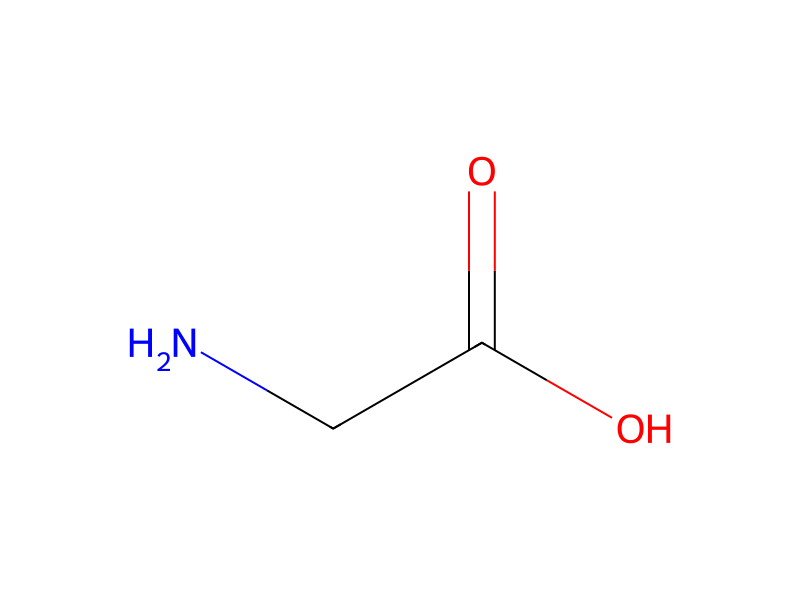
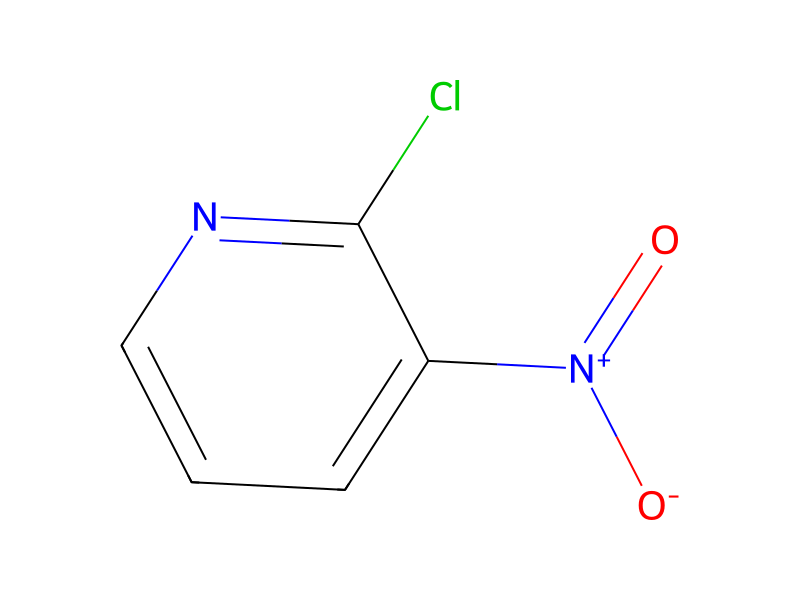
Glycine → (3-Nitro-pyridin-2-ylamino)-acetic acid
Reaction equation

Cl[C:2]1[C:7]([N+:8]([O-:10])=[O:9])=[CH:6][CH:5]=[CH:4][N:3]=1.C(=O)([O-])[O-].[K+].[K+].[NH2:17][CH2:18][C:19]([OH:21])=[O:20]>CCO.O>[N+:8]([C:7]1[C:2]([NH:17][CH2:18][C:19]([OH:21])=[O:20])=[N:3][CH:4]=[CH:5][CH:6]=1)([O-:10])=[O:9]Participants
6
Reactant 3

Product 1

Reagents, catalysts & solvents 2


Conditions
- Temperature
- 0 °C
Procedure
2-Chloro-3-nitropyridine (5 g, 31.5 mmol) was dissolved in EtOH (125 ml), added potassium carbonate (4.35 g, 31.5 mmol) and to this mixture glycine (4.73 g, 6.3 mmol) in 25 ml water was added and refluxed for overnight. The reaction mixture cooled to 0° C. to obtain the solid. Then EtOH was removed on rotavapour and acidified with 2N HCl and solid filtered and dried on vacuum to obtain the title compound quantitatively as a yellow solid.
Workup
- temperaturerefluxed for overnight
- customto obtain the solid
- customThen EtOH was removed on rotavapour
- filtrationfiltered
- customdried on vacuum
Sources & evidence
- ORD record
- ord-7c5f66d7d2eb4c84a09dd6c8c4b16539
- Source dataset
- uspto-grants-2015_03
- Patent number
- US08993612B2
Reaction notes
Loading…