4-Bromoaniline → N-(4-bromophenyl)-4-chloro-3-nitrobenzamide
Reaction equation

[Br:1][C:2]1[CH:8]=[CH:7][C:5]([NH2:6])=[CH:4][CH:3]=1.[Cl:9][C:10]1[CH:18]=[CH:17][C:13]([C:14](Cl)=[O:15])=[CH:12][C:11]=1[N+:19]([O-:21])=[O:20].C(N(CC)C(C)C)(C)C>C(Cl)Cl>[Br:1][C:2]1[CH:8]=[CH:7][C:5]([NH:6][C:14](=[O:15])[C:13]2[CH:17]=[CH:18][C:10]([Cl:9])=[C:11]([N+:19]([O-:21])=[O:20])[CH:12]=2)=[CH:4][CH:3]=1Participants
5
Reactant 3
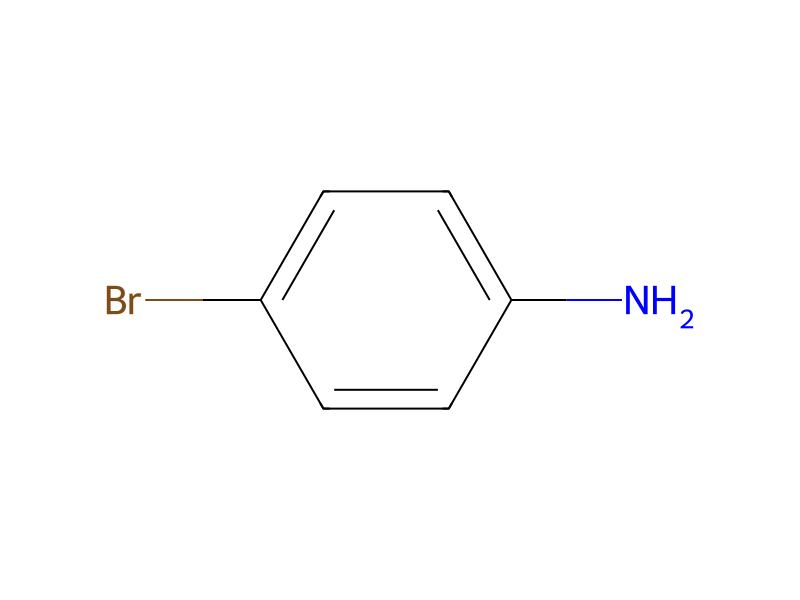


Product 1

Reagents, catalysts & solvents 1

Procedure
A mixture of 4-bromoaniline (2.58 g 14.99 mmol) in dry CH2Cl2 (100 mL) was treated with 4-chloro-3-nitrobenzoyl chloride (3.60 g, 17.99 mmol) and N,N-diisopropyl-ethylamine (3.14 mL, 17.99 mmol), and the resulting mixture stirred at room temperature for 17 hours. The solvent was concentrated under vacuum giving the title compound and the residue taken up in ethyl acetate (100 mL) and washed with water and brine. The organic extract was dried over Na2SO4, filtered and concentrated under vacuum giving the title compound as a tan solid (5.132 g, 14.45 mmol, 96%).
Workup
- concentrationThe solvent was concentrated under vacuum
Sources & evidence
- ORD record
- ord-23a78cb827c14d14a4ac8f183708358b
- Source dataset
- uspto-grants-2012_08
- Patent number
- US08236950B2
Reaction notes
Loading…