Hydrochloric Acid → (E)-N-(4-(3-(4-hydroxy-3-methylphenyl)acryloyl)-3-methylphenyl)acetamide
Reaction equation

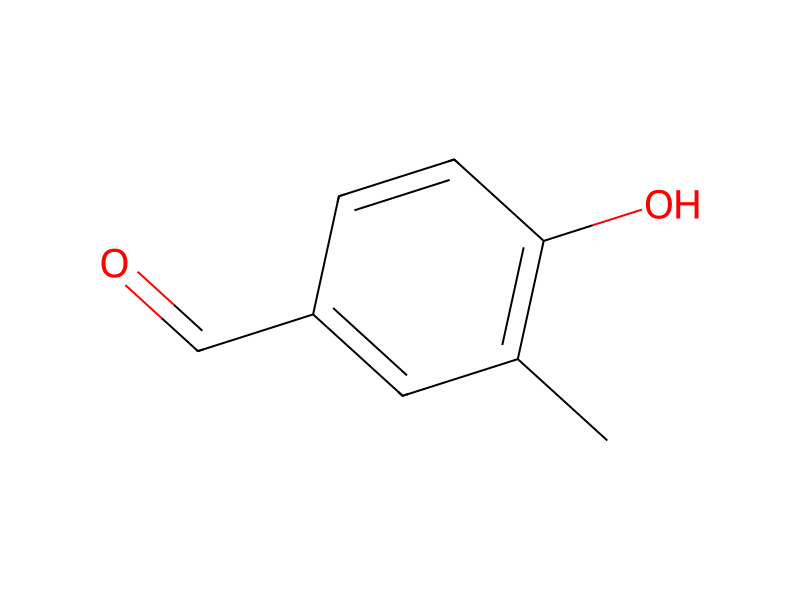
[C:1]([C:4]1[CH:9]=[CH:8][C:7]([NH:10][C:11](=[O:13])[CH3:12])=[CH:6][C:5]=1[CH3:14])(=[O:3])[CH3:2].[OH-].[Na+].[OH:17][C:18]1[CH:25]=[CH:24][C:21]([CH:22]=O)=[CH:20][C:19]=1[CH3:26].Cl>CCO.O>[OH:17][C:18]1[CH:25]=[CH:24][C:21](/[CH:22]=[CH:2]/[C:1]([C:4]2[CH:9]=[CH:8][C:7]([NH:10][C:11](=[O:13])[CH3:12])=[CH:6][C:5]=2[CH3:14])=[O:3])=[CH:20][C:19]=1[CH3:26]Participants
7
Reactant 4



Product 1

Reagents, catalysts & solvents 2


Procedure
To a mixture of N-(4-acetyl-3-methylphenyl)acetamide (1.3 g, 7.0 mmol) and NaOH (1.4 g, 36 mmol) in 25 mL of absolute EtOH was added 4-hydroxy-3-methylbenzaldehyde (1.0 g, 7.3 mmol). The reaction mixture was stirred at room temperature for 18 hr. 5 mL of water was added and the reaction mixture was acidified with concentrated HCl to pH 5-6. The aqueous layer was extracted with two 25 mL portions of EOAc, and the layers were separated. The organic layer was dried with Na2SO4, filtered and concentrated under reduced pressure. The resulting product was submitted to the next step without further purification.
Workup
- extractionThe aqueous layer was extracted with two 25 mL portions of EOAc
- customthe layers were separated
- dry with materialThe organic layer was dried with Na2SO4
- filtrationfiltered
- concentrationconcentrated under reduced pressure
- customThe resulting product was submitted to the next step without further purification
Sources & evidence
- ORD record
- ord-bf73e818b71a49028d1c0b7101c0d143
- Source dataset
- uspto-grants-2012_08
- Patent number
- US08242129B2
Reaction notes
Loading…