Potassium Carbonate → [3-(4-Bromo-2-formyl-phenoxy)-phenyl]-acetic acid ethyl ester
Reaction equation

[CH2:1]([O:3][C:4](=[O:13])[CH2:5][C:6]1[CH:11]=[CH:10][CH:9]=[C:8]([OH:12])[CH:7]=1)[CH3:2].[Br:14][C:15]1[CH:16]=[CH:17][C:18](F)=[C:19]([CH:22]=1)[CH:20]=[O:21].C(=O)([O-])[O-].[K+].[K+]>O1CCOCC1>[CH2:1]([O:3][C:4](=[O:13])[CH2:5][C:6]1[CH:11]=[CH:10][CH:9]=[C:8]([O:12][C:18]2[CH:17]=[CH:16][C:15]([Br:14])=[CH:22][C:19]=2[CH:20]=[O:21])[CH:7]=1)[CH3:2]Participants
5


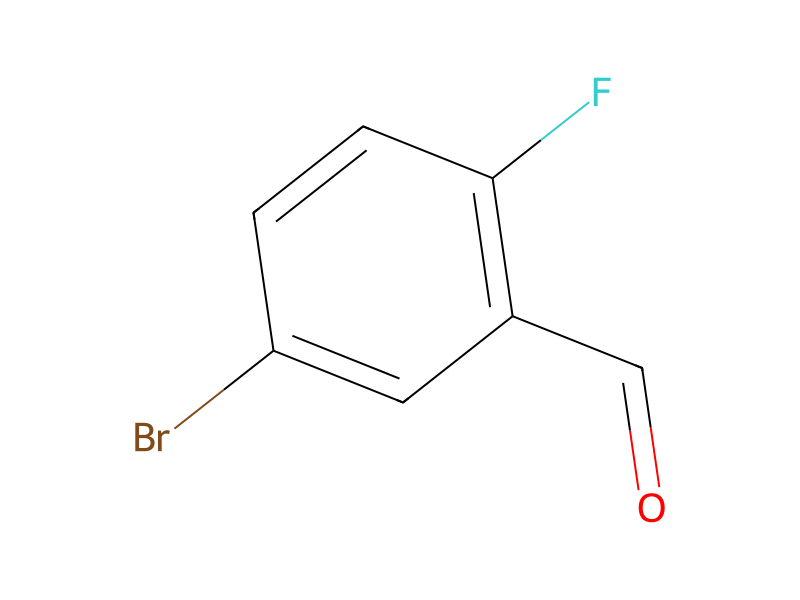


Conditions
- Temperature
- 120 °C
Procedure
(3-Hydroxy-phenyl)-acetic acid ethyl ester (1.0 g, 5.2 mmol), 5-bromo-2-fluorobenzaldehyde (1.06 g, 5.2 mmol), and potassium carbonate (1.44 g, 10.4 mmol) were combined in 1,4-dioxane (30 mL) and heated to 120° C. for 3 days. After work-up, the crude material was purified by silica gel chromatography (0-20% EtOAc in hexanes) to give the desired product (0.70 g).
Workup
- customAfter work-up, the crude material was purified by silica gel chromatography (0-20% EtOAc in hexanes)
Sources & evidence
- ORD record
- ord-36da9683d9af4350923c012a22359835
- Source dataset
- uspto-grants-2012_08
- Patent number
- US08242145B2
Reaction notes
Loading…