Nitrogen → 2-Chloro-4-(2-(trimethylsilyl)ethynyl)pyrimidine
Reaction equation

[Cl:1][C:2]1[N:7]=[C:6](Cl)[CH:5]=[CH:4][N:3]=1.N#N.[CH3:11][Si:12]([C:15]#[CH:16])([CH3:14])[CH3:13]>C1COCC1.CCN(CC)CC.Cl[Pd](Cl)([P](C1C=CC=CC=1)(C1C=CC=CC=1)C1C=CC=CC=1)[P](C1C=CC=CC=1)(C1C=CC=CC=1)C1C=CC=CC=1.C1C=CC(P(C2C=CC=CC=2)C2C=CC=CC=2)=CC=1>[Cl:1][C:2]1[N:7]=[C:6]([C:16]#[C:15][Si:12]([CH3:14])([CH3:13])[CH3:11])[CH:5]=[CH:4][N:3]=1Participants
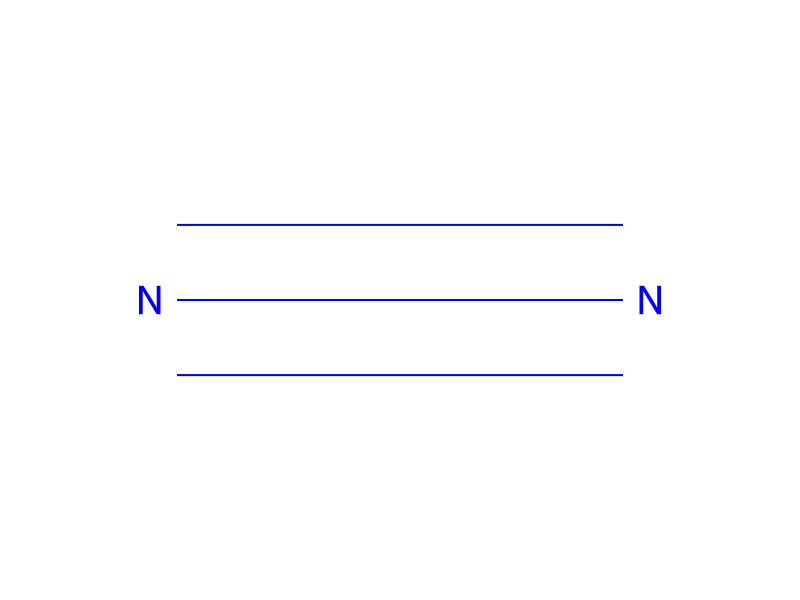
Reactant 3


Product 1

Reagents, catalysts & solvents 4




Procedure
To a mixture of Pd(PPh3)2Cl2 (0.9 g) and PPh3 (0.7 g) in THF (200 mL) and Et3N (300 mL) was added 2,4-dichloropyrimidine (40 g, 0.27 mol) under a stream of N2. After bubbling N2 into the solution for 15 min, CuI (0.5 g) was added, followed by (trimethylsilyl)acetylene (29 g, 0.29 mol). The mixture was heated at reflux for 4.5 h. The mixture was cooled to rt and filtered, washing with EtOAc. The filtrated was concentrated and the residue was diluted with hexanes (500 mL) and loaded directly onto a short pad of SiO2. The product was eluted with 10% EtOAc/hexanes to provide a light orange solid (49.3 g), which was used without further purification. TLC: Rf=0.42. mp 51-54° C. IR: 3125 (w), 2961 (w), 1557 (s), 1523 (s). 1H NMR: 8.58 (d, J=5.0 Hz, 1H), 7.30 (d, J=5.0 Hz, 1H), 0.28 (s, 9H). 13C NMR: 162.23, 160.16, 153.41, 122.52, 104.23, 100.75, 0.01. Anal. Calcd for C9H11ClN2Si: C, 51.29; H, 5.26; N, 13.29. Found: C, 51.45; H, 5.16; N, 13.33.
Workup
- customAfter bubbling N2 into the solution for 15 min
- additionCuI (0.5 g) was added
- temperatureThe mixture was heated
- temperatureat reflux for 4.5 h
- filtrationfiltered
- washwashing with EtOAc
- concentrationThe filtrated was concentrated
- additionthe residue was diluted with hexanes (500 mL)
- washThe product was eluted with 10% EtOAc/hexanes
Sources & evidence
- ORD record
- ord-435047e3147b4af78aec644538b6674b
- Source dataset
- uspto-grants-2012_08
- Patent number
- US08242273B2
Reaction notes
Loading…