Hydrochloric Acid → 1-(4-Nitrophenyl)cyclopropanecarbonitrile
Reaction equation

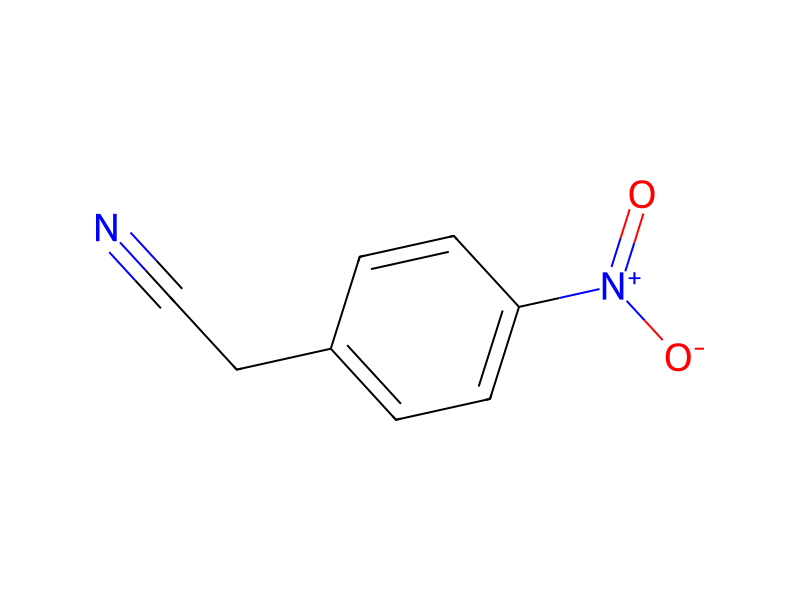
[OH-].[Na+].[N+:3]([C:6]1[CH:11]=[CH:10][C:9]([CH2:12][C:13]#[N:14])=[CH:8][CH:7]=1)([O-:5])=[O:4].Br[CH2:16][CH2:17]Br.Cl>O.[Cl-].C([N+](CC)(CC)CC)C.C(Cl)Cl>[N+:3]([C:6]1[CH:7]=[CH:8][C:9]([C:12]2([C:13]#[N:14])[CH2:17][CH2:16]2)=[CH:10][CH:11]=1)([O-:5])=[O:4]Participants
7
Reactant 4



Product 1

Reagents, catalysts & solvents 2


Procedure
NaOH (5.0 N, 80 ml) was added to a mixture of 4-nitrophenylacetonitrile (10.0 g, 61.7 mmol), 1,2-dibromoethane (8.0 ml, 92.5 mmol), and tetraethylammonium chloride hydrate (10.2 g, 61.7 mmol) in 200 ml of CH2Cl2 at RT. The resulting mixture was stirred at RT for 24 h, diluted with CH2Cl2, and acidified with HCl (10%, aq). The organic layer was separated, washed with brine, condensed, and the crude was purified by flash column chromatography. The titled compound was obtained as a light yellowish solid.
Workup
- customThe organic layer was separated
- washwashed with brine, condensed
- customthe crude was purified by flash column chromatography
Sources & evidence
- ORD record
- ord-8d0f26cb5efc4c358b41fc475b0b3f38
- Source dataset
- uspto-grants-2012_08
- Patent number
- US08247430B2
Reaction notes
Loading…