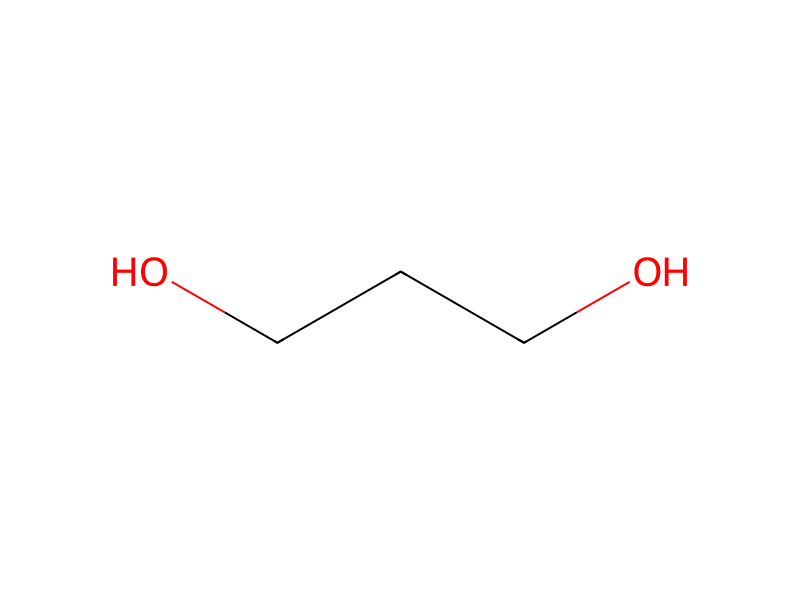
Water → 1,3-Propanediol
Reaction equation

[CH:1]1[C:14]2[C:13](=[O:15])[C:12]3[C:7](=[CH:8][CH:9]=[CH:10][CH:11]=3)[C:6](=[O:16])[C:5]=2[CH:4]=[CH:3][C:2]=1C=O.[CH2:19]([OH:23])[CH2:20][CH2:21][OH:22].C1(C)C=CC(S(O)(=O)=O)=CC=1.O>C1(C)C=CC=CC=1>[C:8]1([CH:21]=[O:22])[C:7]2[C:6](=[O:16])[C:5]3[C:14](=[CH:1][CH:2]=[CH:3][CH:4]=3)[C:13](=[O:15])[C:12]=2[CH:11]=[CH:10][CH:9]=1.[CH2:19]([OH:23])[CH2:20][CH2:21][OH:22]Participants
7





Procedure
A mixture of anthraquinone-2-aldehyde (12.0 g), 1,3-propanediol (10 ml), and p-toluenesulfonic acid (20 mg) in toluene (300 ml) was heated under reflux with a removal of water formed from the condensation of anthraquinone aldehyde and 1,3-propane diol for 4 hours. The mixture was then cooled to room temperature, filtered off with suction, washed with water and diethyl ether, and dried under vacuum to afford anthraquinone-2-propaneacetal (12.5 g, 84%).
Workup
- temperaturewas heated
Sources & evidence
- ORD record
- ord-80e256c5d38242e3bfcf7e6c21b708e2
- Source dataset
- uspto-grants-2006_02
- Patent number
- US06998487B2
Reaction notes
Loading…