Methanol → 2-Chloro-6-methoxy-3-nitropyridine
Reaction equation

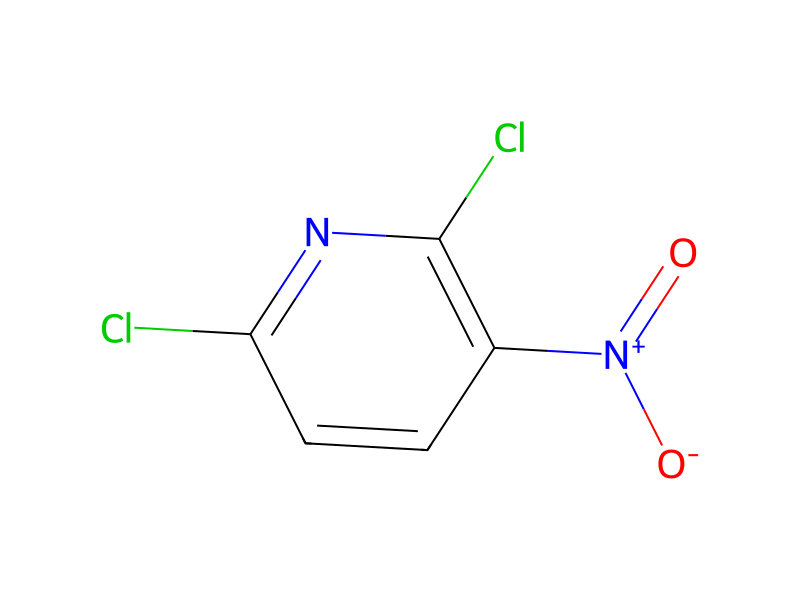
[Cl:1][C:2]1[C:7]([N+:8]([O-:10])=[O:9])=[CH:6][CH:5]=[C:4]([Cl:11])[N:3]=1.[CH3:12][OH:13]>>[Cl:11][C:4]1[CH:5]=[CH:6][C:7]([N+:8]([O-:10])=[O:9])=[C:2]([O:13][CH3:12])[N:3]=1.[Cl:1][C:2]1[C:7]([N+:8]([O-:10])=[O:9])=[CH:6][CH:5]=[C:4]([O:13][CH3:12])[N:3]=1Participants
4



Procedure
A slurry of 2,6-dichloro-3-nitropyridine (92%, 9.9 g, 47 mmol) and K2 CO3 powder (6.5 g, 47 nmol) in methanol (100 mL) was stirred for a week at RT. The reaction was filtered and concentrated. The residue was partitioned in ethyl acetate and 60% sat. aq. NaHCO3. The organic solution was washed with 60% sat. aq. NaHCO3 (2×), H2O, then sat. aq. NaCl, dried (MgSO4) and concentrated to afford 2-chloro-6-methoxy-5-nitropyridine and 2-chloro-6-methoxy-3-nitropyridine (8.9 g, 100%) as a light yellow solid: 1H NMR (CDCl3, 300 MHz, ppm) 8.31 (d, 8.3 Hz, 1H), 8.28 (d, 8.9 Hz, 1H), 7.10 (d, 8.3 Hz, 1H)# 6.82 (d, 8.9 Hz, 1H), 4.15 (s, 3H), 4.06 (s, 3H).
Workup
- filtrationThe reaction was filtered
- concentrationconcentrated
- customThe residue was partitioned in ethyl acetate
- washThe organic solution was washed with 60% sat. aq. NaHCO3 (2×), H2O
- dry with materialsat. aq. NaCl, dried (MgSO4)
- concentrationconcentrated
Sources & evidence
- ORD record
- ord-3d8156a2b83443d785d5ce4b645cd259
- Source dataset
- uspto-grants-2006_02
- Patent number
- US07001921B1
Reaction notes
Loading…