Potassium Carbonate → 2-(4-Chloro-2,6-dimethylphenoxy)acetonitrile
Reaction equation

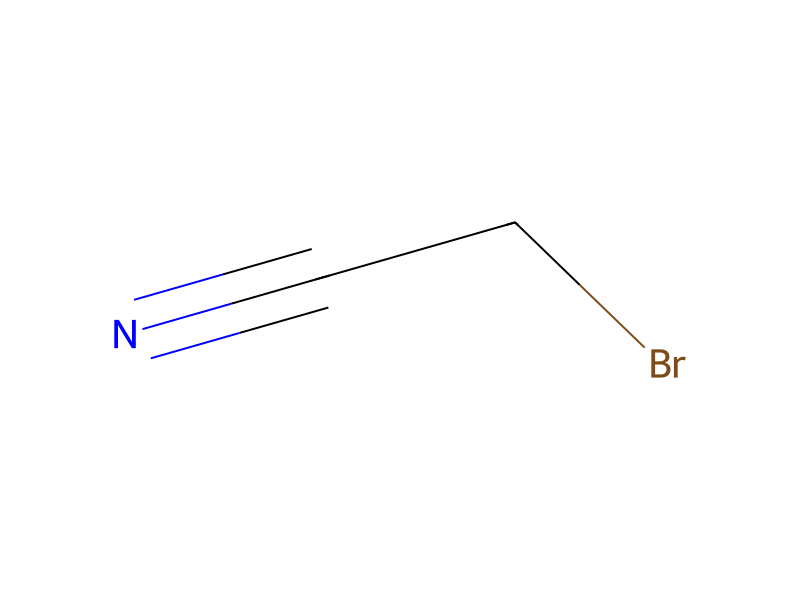
[Cl:1][C:2]1[CH:7]=[C:6]([CH3:8])[C:5]([OH:9])=[C:4]([CH3:10])[CH:3]=1.Br[CH2:12][C:13]#[N:14].C(=O)([O-])[O-].[K+].[K+]>CC(C)=O>[Cl:1][C:2]1[CH:7]=[C:6]([CH3:8])[C:5]([O:9][CH2:12][C:13]#[N:14])=[C:4]([CH3:10])[CH:3]=1Participants
5
Reactant 3


Product 1

Reagents, catalysts & solvents 1

Procedure
4-Chloro-2,6-dimethylphenol (5.0 g, 32 mmol), bromoacetonitrile (2.2 mL, 32 mmol) and potassium carbonate (6.6 g, 48 mmol) are combined with acetone (50 mL) and heated at reflux for 18 h. The reaction is filtered, concentrated and the residue partitioned between dichloromethane and water. The organic phase is washed with 1N HCl and water and is then dried over magnesium sulfate, concentrated and purified by column chromatography (silica, 10% ethyl acetate in hexanes) to provide the title compound. MS (EI) 195 (M)+, Cl pattern.
Workup
- temperatureheated
- temperatureat reflux for 18 h
- filtrationThe reaction is filtered
- concentrationconcentrated
- customthe residue partitioned between dichloromethane and water
- washThe organic phase is washed with 1N HCl and water
- dry with materialis then dried over magnesium sulfate
- concentrationconcentrated
- custompurified by column chromatography (silica, 10% ethyl acetate in hexanes)
Sources & evidence
- ORD record
- ord-ccbd60a19f0a4f3fb55dd5fbe1138f26
- Source dataset
- uspto-grants-2006_02
- Patent number
- US07005440B1
Reaction notes
Loading…