Cyclopropanecarbonyl chloride → 6-Bromo-3-cyclopropyl[1,2,4]triazolo[4,3-a]pyridine
Reaction equation

[Br:1][C:2]1[CH:3]=[CH:4][C:5]([NH:8][NH2:9])=[N:6][CH:7]=1.[CH:10]1([C:13](Cl)=O)[CH2:12][CH2:11]1>C(Cl)(Cl)Cl>[Br:1][C:2]1[CH:3]=[CH:4][C:5]2[N:6]([C:13]([CH:10]3[CH2:12][CH2:11]3)=[N:9][N:8]=2)[CH:7]=1Participants
4
Reactant 2
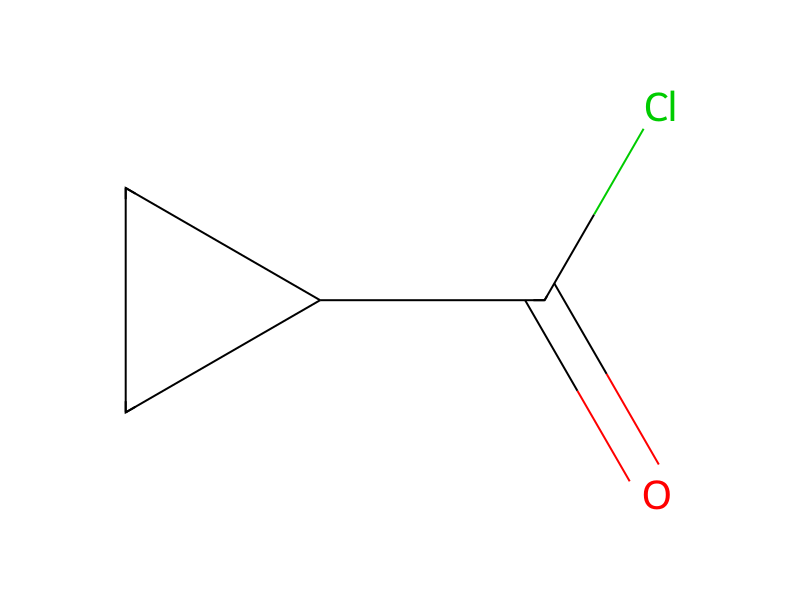

Product 1

Reagents, catalysts & solvents 1

Conditions
- Temperature
- 90 °C
Procedure
A mixture of 5-bromo-pyridin-2-yl-hydrazine (15.0 g, 79.8 mmol) and cyclopropane carbonyl chloride (65 mL, 71.8 mmol) was heated at 90° C. for 18 hours. The brown mixture was allowed to cool to room temperature, filtered, and washed with toluene to afford a light brown solid. This solid was taken up in CHCl3, and washed with saturated aqueous NaHCO3. The organic layer was isolated, and the aqueous layer extracted with CHCl3 (2×). The combined organics were washed with brine, dried over magnesium sulfate, and concentrated in vacuo to give the title compound as a tan solid (18.2 g, 96%).
Workup
- temperatureto cool to room temperature
- filtrationfiltered
- washwashed with toluene
- customto afford a light brown solid
- washwashed with saturated aqueous NaHCO3
- customThe organic layer was isolated
- extractionthe aqueous layer extracted with CHCl3 (2×)
- washThe combined organics were washed with brine
- dry with materialdried over magnesium sulfate
- concentrationconcentrated in vacuo
Sources & evidence
- ORD record
- ord-4318df9c902f48128a09e73a64a88f45
- Source dataset
- uspto-grants-2006_02
- Patent number
- US07005523B2
Reaction notes
Loading…