p-Toluenesulfonic acid → 4-Chloro-2-(dimethoxymethyl)-1-nitrobenzene
Reaction equation

[Cl:1][C:2]1[CH:3]=[CH:4][C:5]([N+:10]([O-:12])=[O:11])=[C:6]([CH:9]=1)C=O.[CH3:13][O:14][CH:15](OC)[O:16][CH3:17].CC1C=CC(S(O)(=O)=O)=CC=1.C(=O)([O-])[O-].[Na+].[Na+]>CO>[Cl:1][C:2]1[CH:3]=[CH:4][C:5]([N+:10]([O-:12])=[O:11])=[C:6]([CH:15]([O:16][CH3:17])[O:14][CH3:13])[CH:9]=1Participants
6





Procedure
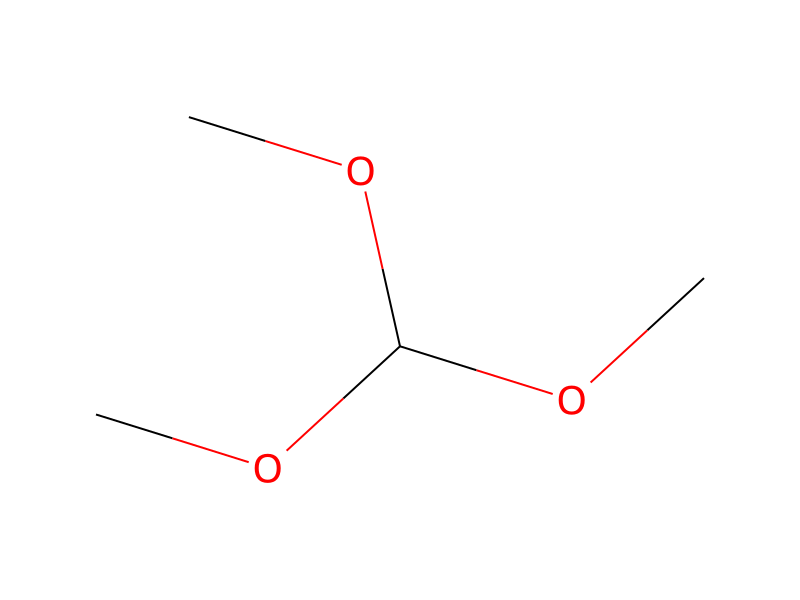
A mixture of 14.7 parts of 5-chloro-2-nitrobenzaldehyde, 13.3 parts of trimethoxymethane, 0.15 parts of 4-methylbenzenesulfonic acid and 64 parts of methanol was stirred at reflux temperature. After cooling, the reaction mixture was neutralized with sodium carbonate and stirred for 5 min. The whole was filtered and the filtrate was evaporated, yielding 18.3 parts (99.7%) of 4-chloro-2-(dimethoxymethyl)-1-nitrobenzene (interm. 43).
Workup
- temperatureat reflux temperature
- temperatureAfter cooling
- stirringstirred for 5 min
- filtrationThe whole was filtered
- customthe filtrate was evaporated
Sources & evidence
- ORD record
- ord-1d07438d3d5e40acb97133fe9a69da3b
- Source dataset
- uspto-grants-1992_06
- Patent number
- US05120845
Reaction notes
Loading…