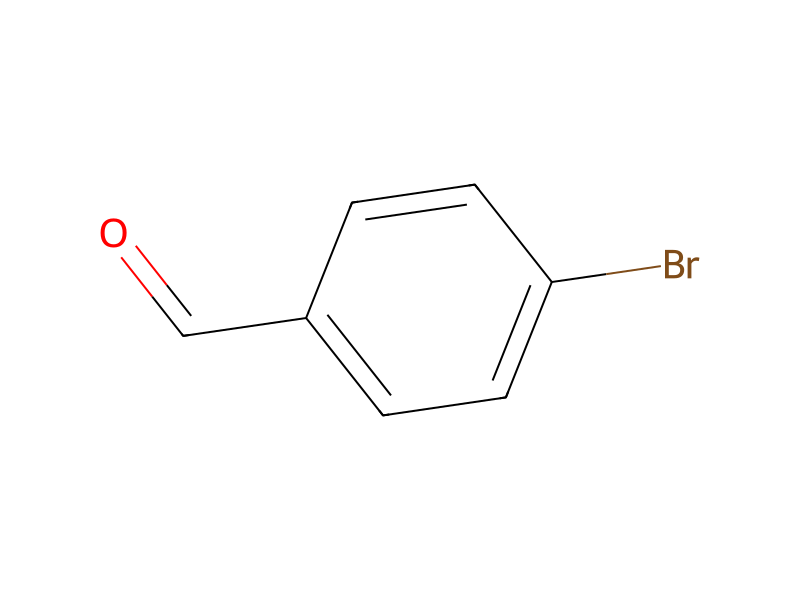
4-Bromobenzaldehyde → HCID 19786996, compound
Reaction equation

[CH3:1][C:2]1([CH3:16])[C:10]2[C:5](=[CH:6][C:7]([C:11]#[CH:12])=[CH:8][CH:9]=2)[C:4]([CH3:14])([CH3:13])[CH:3]1[CH3:15].Br[C:18]1[CH:25]=[CH:24][C:21]([CH:22]=[O:23])=[CH:20][CH:19]=1>>[CH3:1][C:2]1([CH3:16])[C:10]2[C:5](=[CH:6][C:7]([C:11]#[C:12][C:18]3[CH:25]=[CH:24][C:21]([CH:22]=[O:23])=[CH:20][CH:19]=3)=[CH:8][CH:9]=2)[C:4]([CH3:14])([CH3:13])[CH:3]1[CH3:15]Participants
3


Procedure
Using a procedure similar to that described in Example 1c, 8 g (40 millimoles) of (2,3-dihydro-1,1,2,3,3-pentamethyl-5(1H)-indenyl)-ethyne and 4.6 g (25 millimoles) of 4-bromobenzaldehyde were reacted, the solution was filtered and the filtrate was evaporated down to give a residue, which was extracted with sodium bicarbonate solution-methylene chloride. Stirring the residue with methylene chloride and a little cyclohexane gave 2.3 g (29%) of the title compound of melting point 106°-107° C.
Workup
- customwere reacted
- filtrationthe solution was filtered
- customthe filtrate was evaporated down
- customto give a residue, which
- extractionwas extracted with sodium bicarbonate solution-methylene chloride
Sources & evidence
- ORD record
- ord-d7971d0a2ea341a681070c9cd92e4a50
- Source dataset
- uspto-grants-1992_06
- Patent number
- US05126371
Reaction notes
Loading…