Dimethylformamide → 2,4-Imidazolidinedione, 3-[(4-chlorophenyl)methyl]-
Reaction equation

[K].[NH:2]1[CH2:6][C:5](=[O:7])[NH:4][C:3]1=[O:8].[Cl:9][C:10]1[CH:17]=[CH:16][C:13]([CH2:14]Br)=[CH:12][CH:11]=1.CN(C)C=O>O>[Cl:9][C:10]1[CH:17]=[CH:16][C:13]([CH2:14][N:4]2[C:5](=[O:7])[CH2:6][NH:2][C:3]2=[O:8])=[CH:12][CH:11]=1Participants
6
Reactant 4

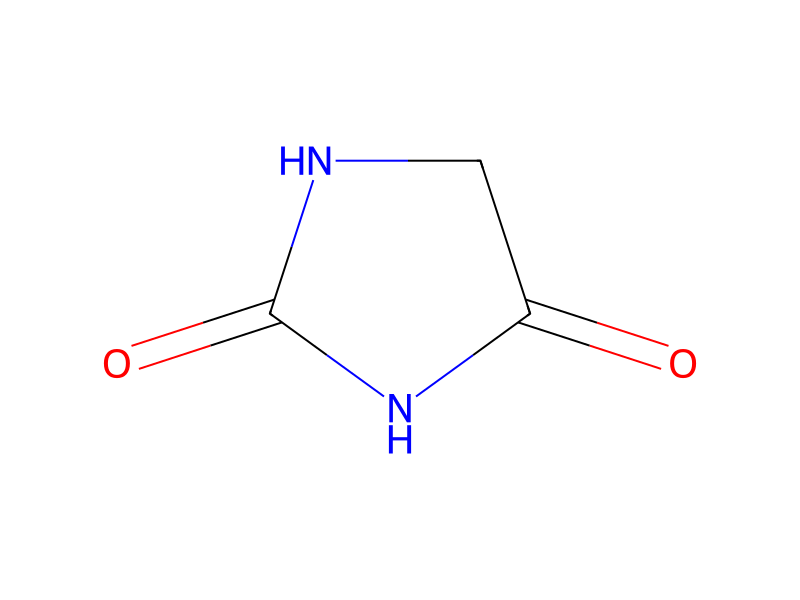


Product 1

Reagents, catalysts & solvents 1

Conditions
- Temperature
- 172.5 °C
Procedure
Under a nitrogen atmosphere in a flame-dried flask, with magnetic stirring, the potassium salt of imidazolidine-2,4-dione (1.382 g, 10 mmol) and 4-chlorobenzyl bromide (2.055 g, 10 mmol) were combined with 15 mL of anhydrous N,N-dimethylformamide (DMF) and heated to 170-175° C. for 5 hours. The reaction was then cooled to room temperature and poured over 50 mL of water to produce a waxy white precipitate. Recrystallization from ethyl acetate: hexanes produced the title product as a white crystalline solid, 0.775 g (34.5%).
Workup
- temperatureThe reaction was then cooled to room temperature
- customto produce a waxy white precipitate
- customRecrystallization from ethyl acetate
Sources & evidence
- ORD record
- ord-443c67e39e164ddbbda4ceab74791db3
- Source dataset
- uspto-grants-2005_07
- Patent number
- US06921760B2
Reaction notes
Loading…