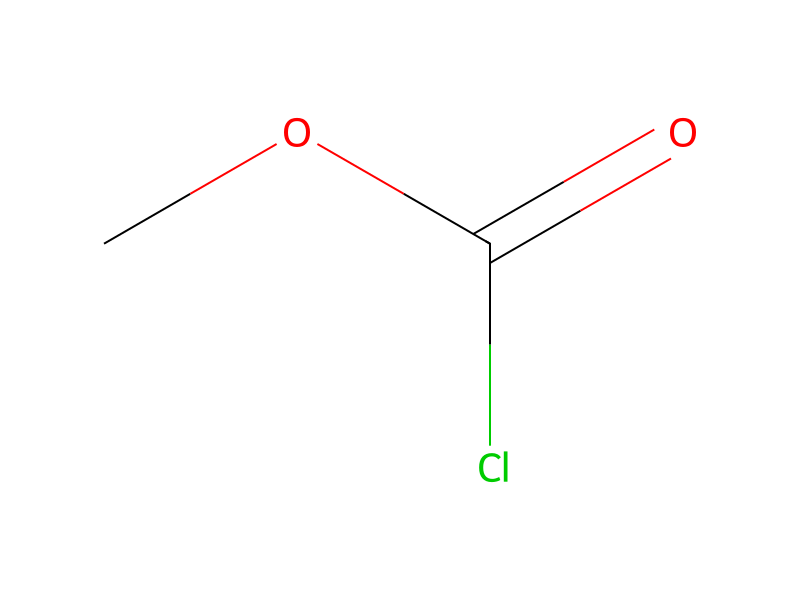
Methyl chloroformate → Methyl 7-bromo-2-methyl-2H-indazole-3-carboxylate
Reaction equation

[Br:1][C:2]1[C:10]2[C:6](=[CH:7][N:8]([CH3:11])[N:9]=2)[CH:5]=[CH:4][CH:3]=1.C([N-]C(C)C)(C)C.[Li+].C1COCC1.CCCCCCC.C(C1C=CC=CC=1)C.Cl[C:41]([O:43][CH3:44])=[O:42]>>[CH3:44][O:43][C:41]([C:7]1[N:8]([CH3:11])[N:9]=[C:10]2[C:6]=1[CH:5]=[CH:4][CH:3]=[C:2]2[Br:1])=[O:42]Participants
5


Conditions
- Temperature
- 2.5 °C
Procedure
To a solution of 7-bromo-2-methyl-2H-indazole (6: R=Me, 1.50 g, 7.12 mmol) in 50 mL of THE at −78° C. was added a 2 M solution of lithium diisopropylamide in THF/heptane/ethylbenzene (4.3 mL, 8.6 mmol). The solution was stirred at 0-5° C. for 15 m, then rechilled to −78° C. To the solution was added methyl chloroformate (0.66 mL, 8.5 mmol) all at once, and the mixture was stirred while slowly warmed to room temperature over 19 h. The reaction was quenched with silica gel and concentrated. Column chromatography (0→20% EtOAc/hexanes) afforded of 7-bromo-2-methyl-2H-indazole-3-carboxylic acid methyl ester (35a: 1.52 g; 79%; m.p. 131-132) as a pale yellow solid.
Workup
- customrechilled to −78° C
- stirringwas stirred
- temperaturewhile slowly warmed to room temperature over 19 h
- customThe reaction was quenched with silica gel
- concentrationconcentrated
Sources & evidence
- ORD record
- ord-3c162ef834344c9ab173b70193a78db0
- Source dataset
- uspto-grants-2008_04
- Patent number
- US07365211B2
Reaction notes
Loading…