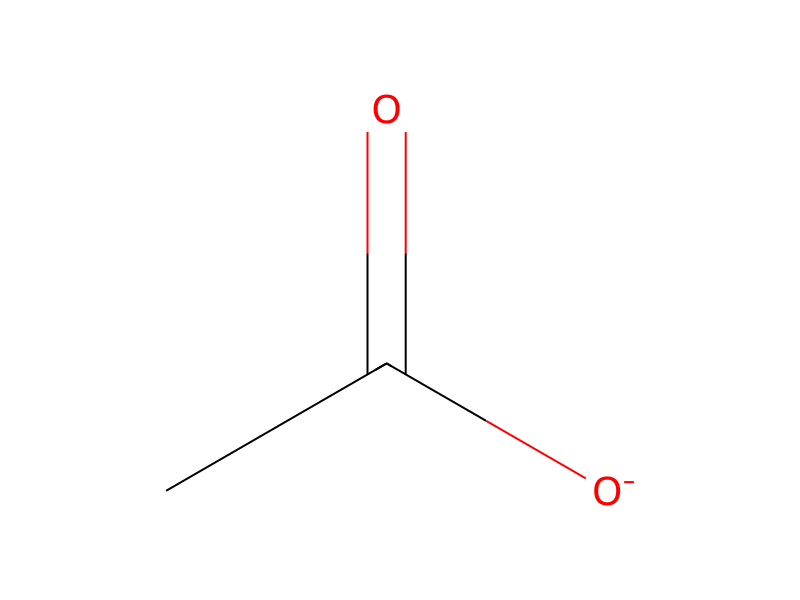
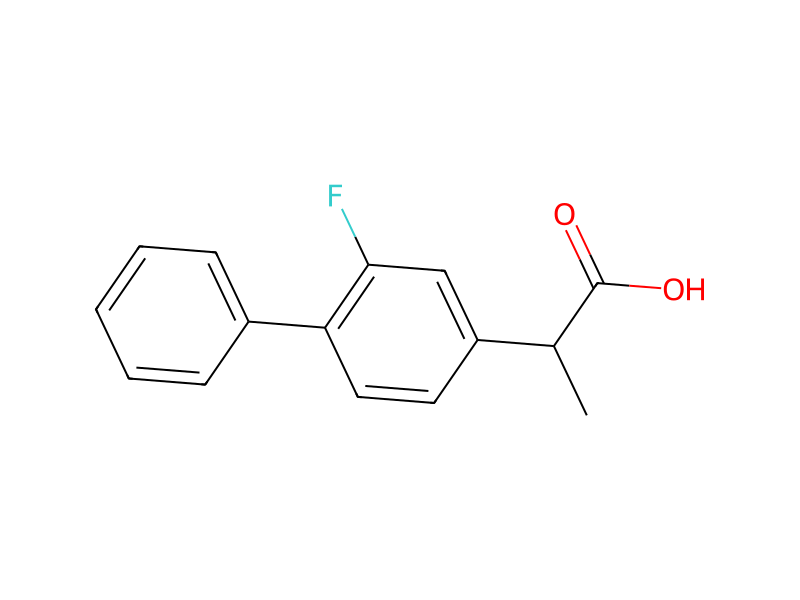
Acetate → Flurbiprofen
Reaction equation

[Tl].C([O-])(=O)C.[F:6][C:7]1[CH:12]=[C:11]([CH:13]([CH3:18])[C:14]([O:16]C)=[O:15])[CH:10]=[CH:9][C:8]=1[C:19]1[CH:24]=[CH:23][CH:22]=[CH:21][CH:20]=1>C(O)(=O)C.CCCCCC>[F:6][C:7]1[CH:12]=[C:11]([CH:13]([CH3:18])[C:14]([OH:16])=[O:15])[CH:10]=[CH:9][C:8]=1[C:19]1[CH:20]=[CH:21][CH:22]=[CH:23][CH:24]=1Participants
5
Reactant 3


Product 1
Reagents, catalysts & solvents 1

Procedure
Following the procedure of Example 2, the enol ether of the formula ##STR2## is reacted with thallium (lll) acetate in an aqueous acetic acid/hexane mixture at 25° to 50° C. until methyl 2-(2-fluoro-4-biphenylyl)propionate is formed. This ester is isolated from the reaction mixture and hydrolyzed to 2-(2-fluoro-4-biphenylyl)propionic acid (generic name, flurbiprofen) by the described procedure.
Workup
- customis formed
Sources & evidence
- ORD record
- ord-e69669eaae284500911b8cdc59cc1fe4
- Source dataset
- uspto-grants-1980_10
- Patent number
- US04226790
Reaction notes
Loading…