2-Naphthalenecarboxaldehyde → HCID 53995490, compound
Reaction equation

C1C2C(=CC=CC=2)C=CC=1C=O.[CH:13]1[C:22]2[C:17](=[CH:18][CH:19]=[CH:20][CH:21]=2)[CH:16]=[CH:15][C:14]=1[C:23]([CH2:25][CH:26]([CH3:30])[C:27]([OH:29])=O)=[O:24].[NH:31]1[CH2:38][CH2:37][CH2:36][C@H:32]1[C:33]([OH:35])=[O:34].[C:39]([O-:42])(=[S:41])[CH3:40].[Na+]>C(#N)C>[C:39]([S:41][CH:25]([C:23]([C:14]1[CH:15]=[CH:16][C:17]2[C:22](=[CH:21][CH:20]=[CH:19][CH:18]=2)[CH:13]=1)=[O:24])[CH:26]([CH3:30])[C:27]([N:31]1[CH2:38][CH2:37][CH2:36][C@H:32]1[C:33]([OH:35])=[O:34])=[O:29])(=[O:42])[CH3:40]Participants
6

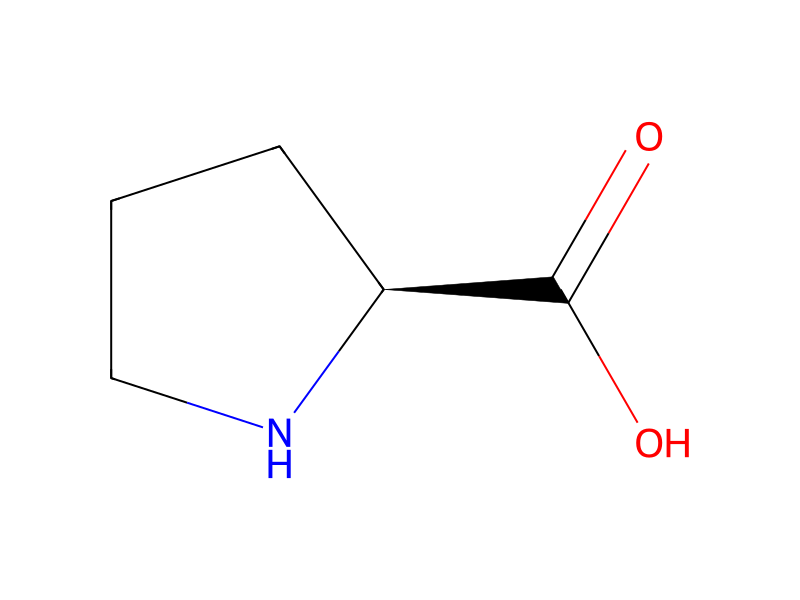



Procedure
As for Example 48, 2-naphthaldehyde is converted to 3-(2-naphthoyl)-2-methylpropionic acid and coupled to L-proline. The 1-[3-(2-naphthoyl)-2-methylpropionyl]-L-proline is separated into isomers A and B. Isomer A, (S)-1-[3-(2-naphthoyl)-2-methylpropionyl]-L-proline is reacted with bromine in acetic acid and the product reacted with sodium thioacetate in acetonitrile as for Example 72 to give the product of the example as a glass (mixture of diastereomers).
Workup
- customThe 1-[3-(2-naphthoyl)-2-methylpropionyl]-L-proline is separated into isomers A and B
- customIsomer A, (S)-1-[3-(2-naphthoyl)-2-methylpropionyl]-L-proline is reacted with bromine in acetic acid
- customto give the product of the example
- additionas a glass (mixture of diastereomers)
Sources & evidence
- ORD record
- ord-d450547e158e4ff1bd57ca8be40adfd7
- Source dataset
- uspto-grants-1980_10
- Patent number
- US04226775
Reaction notes
Loading…