Oxygen → Diacetoxy-butene
Reaction equation

[Sb].[Cl-].[Cs+].[C:4]([O-:7])(=[O:6])[CH3:5].[K+].[CH2:9]=[CH:10][CH:11]=[CH2:12].O=O>[Pd].[V].C(O)(=O)C>[C:4]([O:7][C:9]([O:7][C:4](=[O:6])[CH3:5])=[CH:10][CH2:11][CH3:12])(=[O:6])[CH3:5]Participants





Procedure
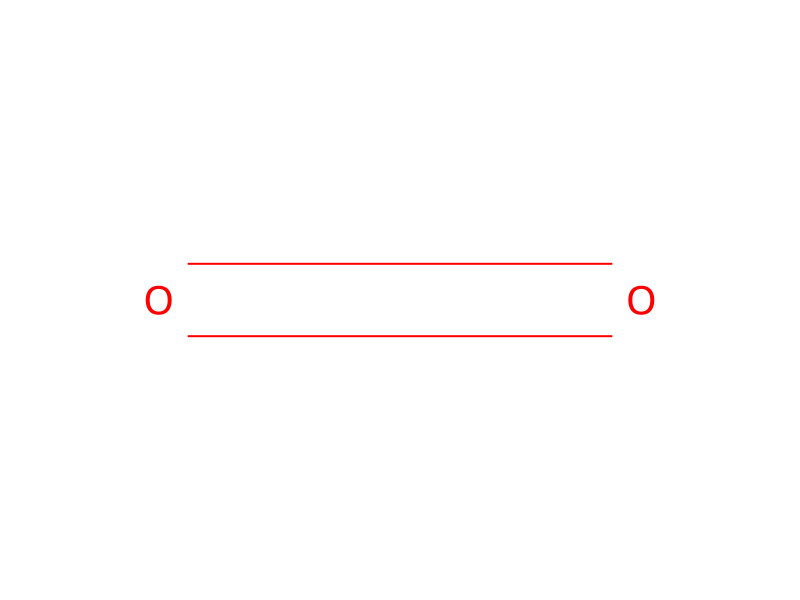
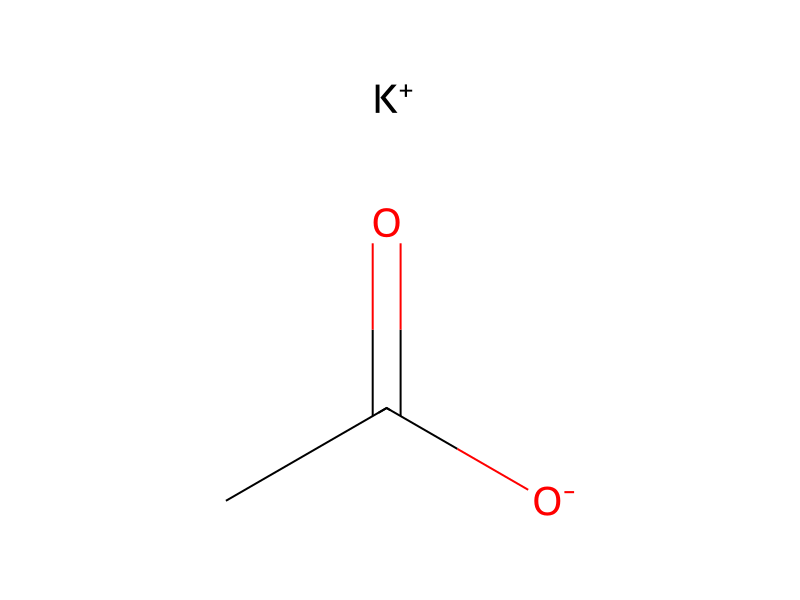
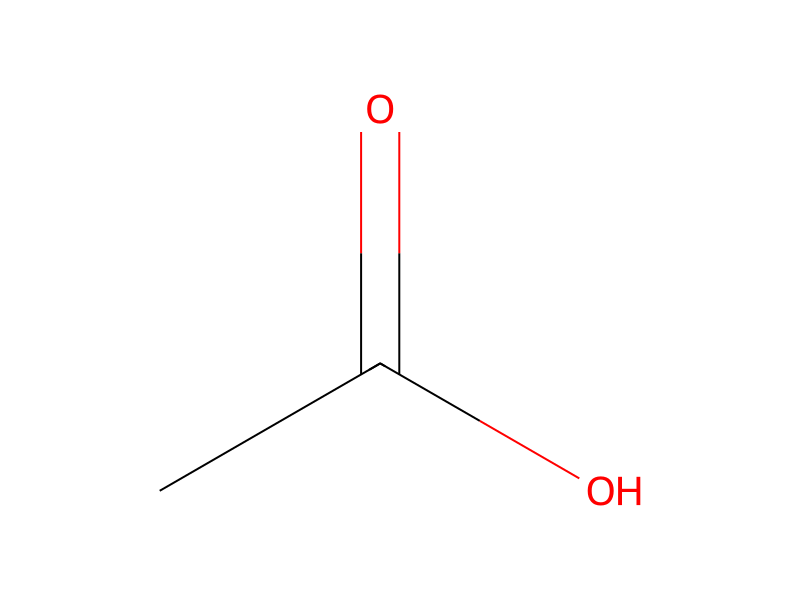
One liter of a silica-alumina catalyst (weight ratio of silica/alumina=10/90) on which palladium, vanadium, antimony, cesium chloride and potassium acetate were supported was packed in a stainless steel reaction vessel with an inner diameter of 1.5 inches, and butadiene, acetic acid, oxygen and nitrogen were supplied so that they might pass through the catalyst layer at rates of 100 l./hr, 200 l./hr, 30 l./hr and 670 l./hr, respectively, and reacted at 170°-190° C. therein. As a result, diacetoxybutene was obtained at a space time yield of 0.75 mol/l.cat·hr and CO2 at a space time yield of 0.048 mol/l.cat·hr. The reaction product containing these substances was subjected to gas-liquid separation under the conditions of 40° C. and 0.5 kg/cm2G, and 99.8% by volume of the gaseous component was circulated back to the reaction system. This means that the amount of butadiene to be taken out, that is, the amount of butadiene treated, was only 0.2% by volume of the gaseous component. The butadiene and oxygen supplies in the steady state were 23.5 l./hr and 9.9 l./hr, respectively, and not supply of nitrogen was required. The amount of the carbon dioxide gas in the system reached 80.2% by volume of the inert gas in the steady state. As a result, diacetoxybutene was obtained at a space time yield of 0.68 mol/l.cat·hr on the 70th day after the start of the reaction, and little drop of activity was seen.
Workup
- custom/hr, respectively, and reacted at 170°-190° C.
Sources & evidence
- ORD record
- ord-b1d17462789d42499532d4ced6e7cfbe
- Source dataset
- uspto-grants-1980_10
- Patent number
- US04228301
Reaction notes
Loading…