2,4-Dichlorophenol → 1-(2,4-Dichlorophenoxy)-3,3-dimethyl-4-fluoro-2-butanone
Reaction equation

Br[CH2:2][C:3](=[O:9])[C:4]([CH3:8])([CH3:7])[CH2:5][F:6].C(=O)([O-])[O-].[K+].[K+].[Cl:16][C:17]1[CH:22]=[C:21]([Cl:23])[CH:20]=[CH:19][C:18]=1[OH:24]>CC(C)=O>[Cl:16][C:17]1[CH:22]=[C:21]([Cl:23])[CH:20]=[CH:19][C:18]=1[O:24][CH2:2][C:3](=[O:9])[C:4]([CH3:8])([CH3:7])[CH2:5][F:6]Participants
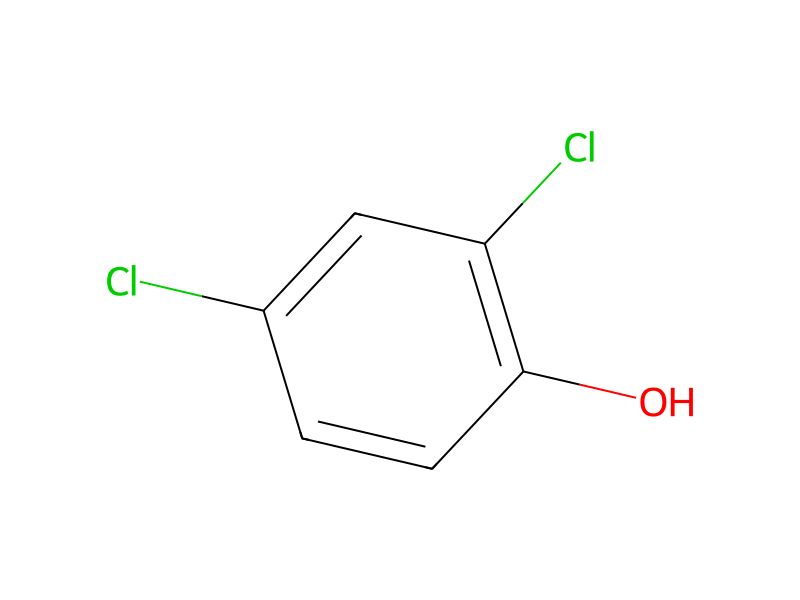




Procedure
A solution of 197 g (1 mol) of 1-bromo-3,3-dimethyl-4-fluoro-2-butanone in 100 ml of acetone was added dropwise, at the boiling point, to 140 g (1 mol) of potassium carbonate and 163 g (1 mol) of 2,4-dichlorophenol in 1,000 ml of acetone. The mixture was stirred under reflux for 20 hours, cooled and filtered. The filtrate was concentrated by distilling off the acetone under a waterpump vacuum. The residue was dissolved in 500 ml of toluene, washed with 500 ml of 10% strength sodium hydroxide solution and with two 250 ml portions of water, dried over sodium sulphate and concentrated by distilling off the toluene under a waterpump vacuum. 244.6 g (88% of theory) of 1-(2,4-dichlorophenoxy)-3,3-dimethyl-4-fluoro-2-butanone were obtained as a highly viscous oil which could be further reacted in crude form.
Workup
- temperatureunder reflux for 20 hours
- temperaturecooled
- filtrationfiltered
- concentrationThe filtrate was concentrated
- distillationby distilling off the acetone under a waterpump vacuum
- dissolutionThe residue was dissolved in 500 ml of toluene
- washwashed with 500 ml of 10% strength sodium hydroxide solution and with two 250 ml portions of water
- dry with materialdried over sodium sulphate
- concentrationconcentrated
- distillationby distilling off the toluene under a waterpump vacuum
Sources & evidence
- ORD record
- ord-863e67b5e218485582c81e7b30d607c0
- Source dataset
- uspto-grants-1983_12
- Patent number
- US04419361
Reaction notes
Loading…