Phosgene → HCID 20456547, compound
Reaction equation

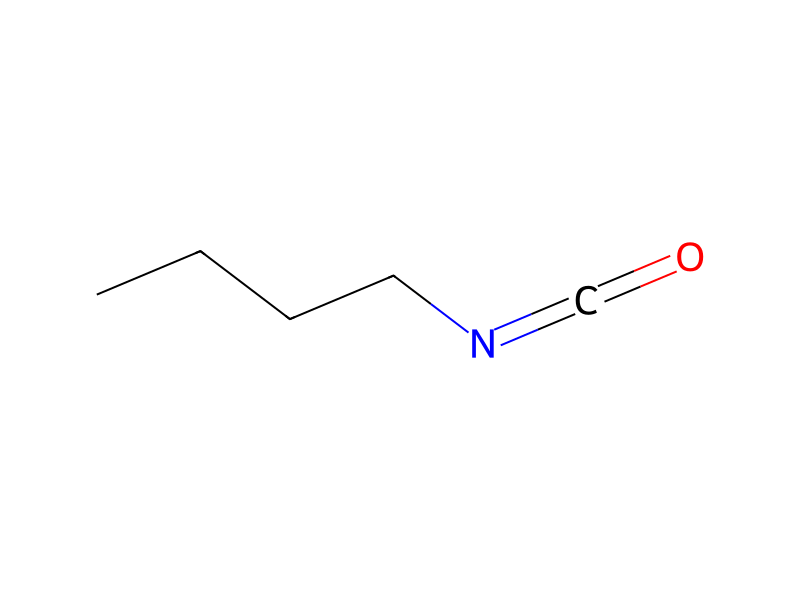
[N+:1]([C:4]1[CH:9]=[CH:8][CH:7]=[CH:6][C:5]=1[CH:10]([S:12]([NH2:15])(=[O:14])=[O:13])[CH3:11])([O-:3])=[O:2].C(N=[C:21]=[O:22])CCC.N12CCN(CC1)CC2.C(Cl)(Cl)=O>>[N+:1]([C:4]1[CH:9]=[CH:8][CH:7]=[CH:6][C:5]=1[CH:10]([S:12]([N:15]=[C:21]=[O:22])(=[O:13])=[O:14])[CH3:11])([O-:3])=[O:2]Participants
5



Procedure
A mixture of 16 g of the product from Example 14, 8.0 ml of n-butyl isocyanate, and 0.2 g of 1,4-diazabicyclo[2.2.2]octane (DABCO) in 125 ml dry xylenes was heated to 130°-135° C. for 11/2 hours. To this solution was added 6 ml of phosgene at a rate which maintained the temperature above 130° C. After completion of the addition (ca. one hour), the solution was cooled and filtered under nitrogen. The filtrate was concentrated in vacuo to give the crude 1-(2-nitrophenyl)ethanesulfonyl isocyanate as a viscous orange oil. The IR spectrum of this compound displayed a characteristic isocyanate absorption at 2240 cm-1.
Workup
- temperaturewas heated to 130°-135° C. for 11/2 hours
- temperaturemaintained the temperature above 130° C
- additionAfter completion of the addition (ca. one hour)
- temperaturethe solution was cooled
- filtrationfiltered under nitrogen
- concentrationThe filtrate was concentrated in vacuo
Sources & evidence
- ORD record
- ord-13c74eb266454ae1b03dfb6d8143d13c
- Source dataset
- uspto-grants-1983_12
- Patent number
- US04420325
Reaction notes
Loading…