4-Hydroxymethylpyridine → HCID 59013789, compound
Reaction equation

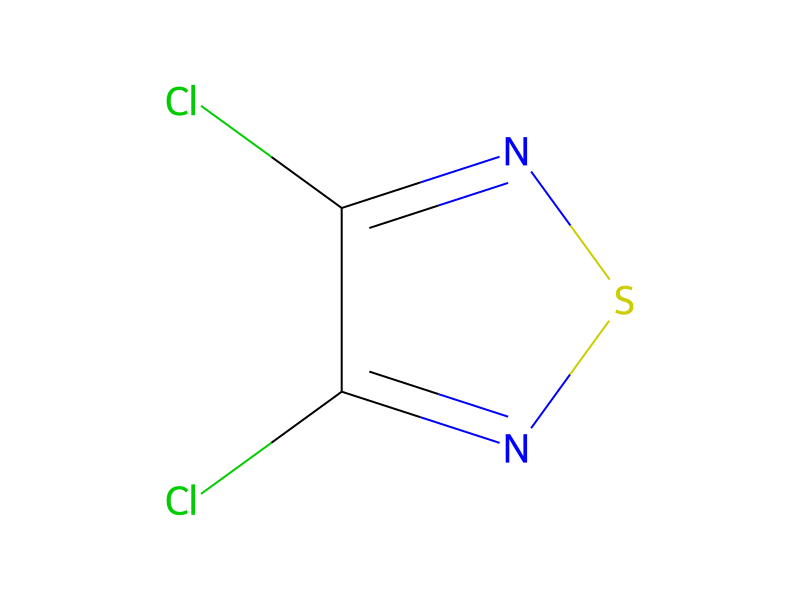
[Cl:1][C:2]1[C:6](Cl)=[N:5][S:4][N:3]=1.[N:8]1[CH:13]=[CH:12][C:11]([CH2:14][OH:15])=[CH:10][CH:9]=1.CC(C)([O-])C.[K+]>C(O)(C)(C)C.O.Cl>[Cl:1][C:2]1[C:6]([O:15][CH2:14][C:11]2[CH:12]=[CH:13][N:8]=[CH:9][CH:10]=2)=[N:5][S:4][N:3]=1Participants
7






Procedure
3,4-Dichloro-1,2,5-thiadiazole (2.00 mL, 21.3 mmol) was dissolved in 70 mL of t-butanol along with 4-pyridine methanol (1.05 g, 9.62 mmol). 30 mL of 1.0 M potassium t-butoxide (30 mmol) was added and the reaction was stirred at room temperature overnight. The reaction was diluted with 100 mL of water and neutralized with 1.0 M HCl. The product was extracted 3 times with 100 mL portions of ethyl acetate. The combined organic fractions were dried with magnesium sulfate and concentrated under vacuum. The residue was purified by flash chromatography with a 2:1 solution of hexanes in ethyl acetate, affording 4-(4-chloro-[1,2,5]thiadiazol-3-yloxymethyl)-pyridine (821 mg) as an off-white solid.
Workup
- extractionThe product was extracted 3 times with 100 mL portions of ethyl acetate
- dry with materialThe combined organic fractions were dried with magnesium sulfate
- concentrationconcentrated under vacuum
- customThe residue was purified by flash chromatography with a 2:1 solution of hexanes in ethyl acetate
Sources & evidence
- ORD record
- ord-b98ea9bf76bb4dd9b06d50a12f0ed9b4
- Source dataset
- uspto-grants-2011_09
- Patent number
- US08013156B2
Reaction notes
Loading…