Potassium Carbonate → HCID 57955596, compound
Reaction equation

[Cl:1][C:2]1[N:7]=[C:6](Cl)[C:5]([N+:9]([O-:11])=[O:10])=[CH:4][N:3]=1.[CH:12]1([NH:18][CH2:19][C:20]([F:27])([CH3:26])[C:21]([O:23][CH2:24][CH3:25])=[O:22])[CH2:17][CH2:16][CH2:15][CH2:14][CH2:13]1.C(=O)([O-])[O-].[K+].[K+]>CC(C)=O>[Cl:1][C:2]1[N:7]=[C:6]([N:18]([CH:12]2[CH2:13][CH2:14][CH2:15][CH2:16][CH2:17]2)[CH2:19][C:20]([F:27])([CH3:26])[C:21]([O:23][CH2:24][CH3:25])=[O:22])[C:5]([N+:9]([O-:11])=[O:10])=[CH:4][N:3]=1Participants
5

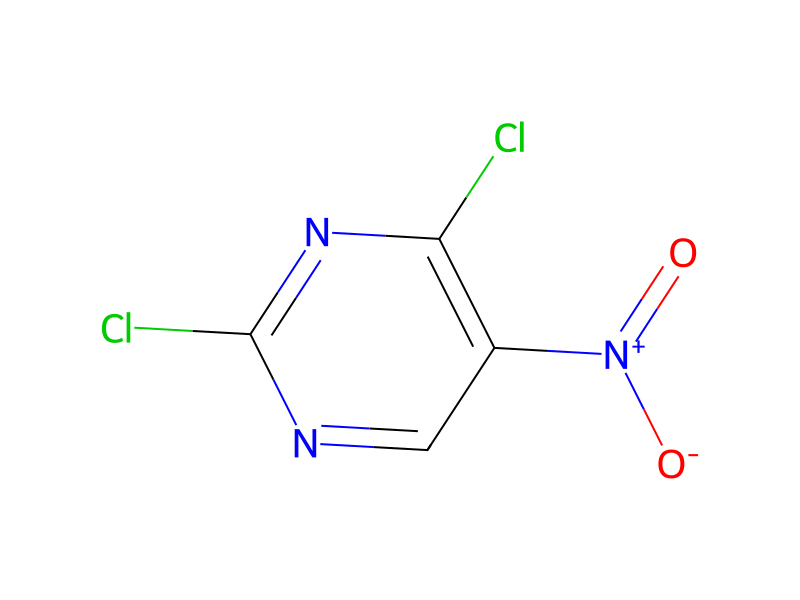



Procedure
To a solution of 2,4-dichloro-5-nitropyrimidine (970 mg, 5 mmol) in anhydrous acetone (20 ml) at 0° C., was added dropwise a solution of ethyl 3-(cyclohexylamino)-2-fluoro-2-methylpropanoate (1.1 g, 4.76 mmol) in acetone (5 mL) over 10 min. After which, potassium carbonate (1.66 g, 12 mmol) was added and the whole was stirred at rt for 18 h. After evaporation in vacuo, the residue was partitioned between ethyl acetate (200 ml) and water (200 ml). The organic layer was washed with NaHCO3, brine and water, dried over Na2SO4 and concentrated in vacuo to give a red residue (1.9 g) which was used directly for next step. [M+H] calc'd for C16H22ClFN4O4, 389. found 389.
Workup
- customAfter evaporation in vacuo
- customthe residue was partitioned between ethyl acetate (200 ml) and water (200 ml)
- washThe organic layer was washed with NaHCO3, brine and water
- dry with materialdried over Na2SO4
- concentrationconcentrated in vacuo
Sources & evidence
- ORD record
- ord-c0bae99be7ff46358ac573db534ae86a
- Source dataset
- uspto-grants-2011_09
- Patent number
- US08026234B2
Reaction notes
Loading…