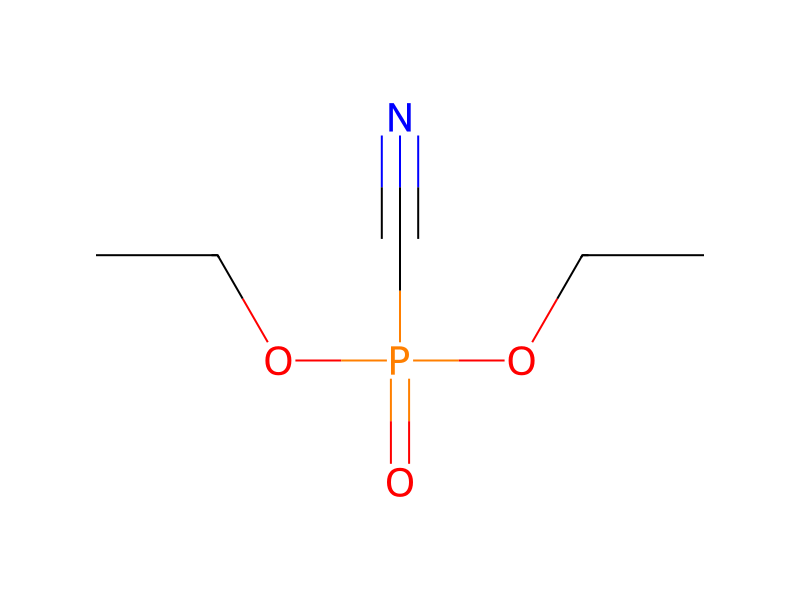
Diethyl cyanophosphonate → HCID 10180725, compound
Reaction equation

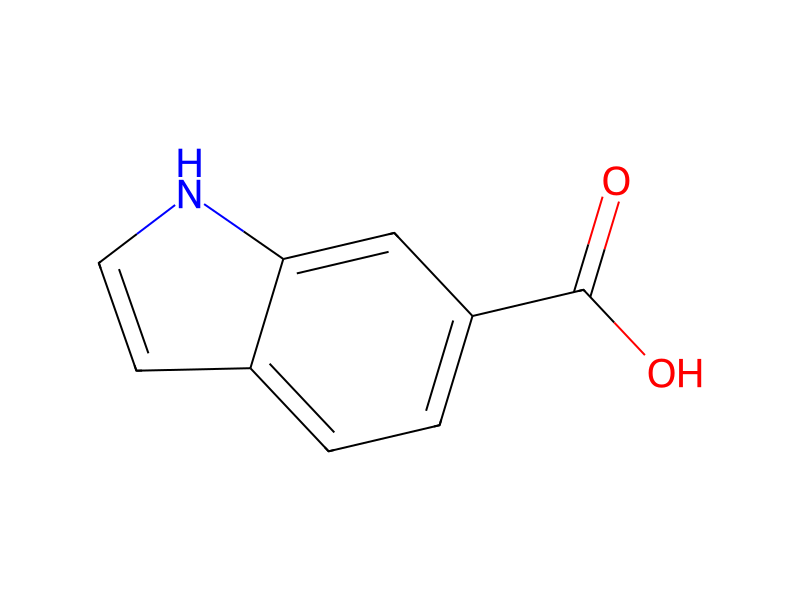
[C:1]([C:4]1[CH:12]=[C:11]2[C:7]([CH:8]=[CH:9][NH:10]2)=[CH:6][CH:5]=1)([OH:3])=O.[NH2:13][C@@H:14]([C:18]([N:20]1[CH2:25][CH2:24][CH:23]([CH:26]2[CH2:31][CH2:30][N:29]([CH3:32])[CH2:28][CH2:27]2)[CH2:22][CH2:21]1)=[O:19])[CH:15]([CH3:17])[CH3:16].C(P(=O)(OCC)OCC)#N>C(Cl)Cl>[NH3:10].[NH:10]1[C:11]2[C:7](=[CH:6][CH:5]=[C:4]([C:1]([NH:13][C@@H:14]([C:18]([N:20]3[CH2:25][CH2:24][CH:23]([CH:26]4[CH2:27][CH2:28][N:29]([CH3:32])[CH2:30][CH2:31]4)[CH2:22][CH2:21]3)=[O:19])[CH:15]([CH3:16])[CH3:17])=[O:3])[CH:12]=2)[CH:8]=[CH:9]1Participants



Conditions
- Temperature
- -15 °C
Procedure
6-Carboxyindole (4.0 g, 24.8 mmol) and 1-(D-valinyl)-4-(1-methylpiperidin-4-yl)piperidine (10.1 g, 27.8 mmol) are slurried in anhydrous CH2Cl2 (250 mL) and cooled to −15° C. To this slurry is added diethyl cyanophosphonate (4.5 mL, 29.8 mmol), followed by TEA (11.1 mL, 79.4 mmol) maintaining the temperature below −10° C. The reaction is allowed to warm to room temperature overnight. The following morning, if TLC indicates starting material still present, additional 6-carboxyindole (0.5 g, 3.1 mmol) and diethyl cyanophosphonate (0.5 mL, 3.3 mmol) are added, followed by TEA (1.0 mL, 7.2 mmol). After stirring for an additional 2 h, the reaction is quenched with the addition of brine (100 mL), forming an insoluble brown oil on the sides of the flask. The layers are separated and the aqueous layer is extracted with CH2Cl2 (3×100 mL). The organic layers are combined, dried over Na2SO4, filtered and concentrated. The crude material is then purified using chromatography over silica gel, with 5% (2 M NH3 in MeOH)/CHCl3 as the eluent, to give 9.7 g (92%) of the title compound as a light yellow foam.
Workup
- temperaturemaintaining the temperature below −10° C
- temperatureto warm to room temperature overnight
- customthe reaction is quenched with the addition of brine (100 mL)
- customforming an insoluble brown oil on the sides of the flask
- customThe layers are separated
- extractionthe aqueous layer is extracted with CH2Cl2 (3×100 mL)
- dry with materialdried over Na2SO4
- filtrationfiltered
- concentrationconcentrated
- customThe crude material is then purified
Sources & evidence
- ORD record
- ord-076c737de8e0437987f3ca86ddc5f2ae
- Source dataset
- uspto-grants-2007_09
- Patent number
- US07265121B2
Reaction notes
Loading…