Cycloheptylamine → 6-chloro-N-(3-chloro-4-methoxyphenyl)-N'-cycloheptyl-[1,3,5]triazine-2,4-diamine
Reaction equation

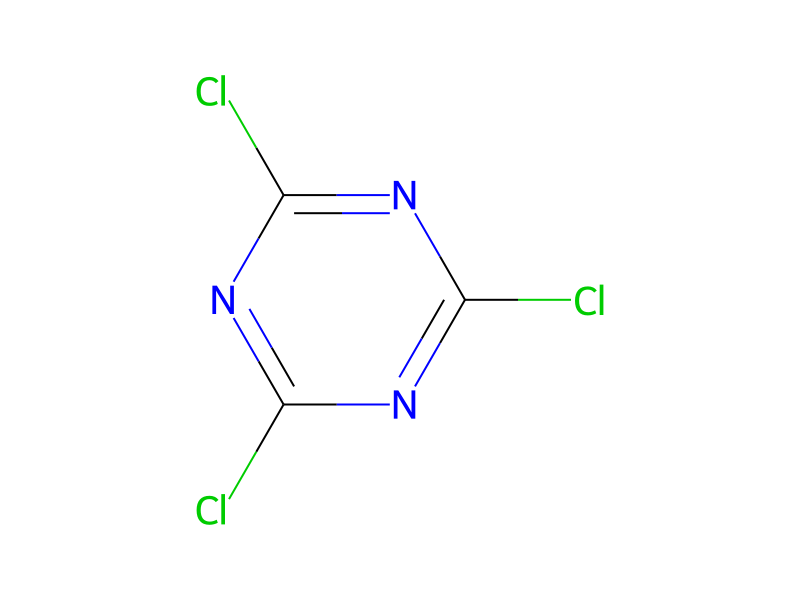
[Cl:1][C:2]1[CH:3]=[C:4]([NH:10][C:11]2[N:16]=[C:15](Cl)[N:14]=[C:13]([Cl:18])[N:12]=2)[CH:5]=[CH:6][C:7]=1[O:8][CH3:9].N1C(Cl)=NC(Cl)=NC=1Cl.ClC1C=C(C=CC=1OC)N.[CH:38]1([NH2:45])[CH2:44][CH2:43][CH2:42][CH2:41][CH2:40][CH2:39]1.[OH-].[Na+]>CC(C)=O>[Cl:18][C:13]1[N:12]=[C:11]([NH:10][C:4]2[CH:5]=[CH:6][C:7]([O:8][CH3:9])=[C:2]([Cl:1])[CH:3]=2)[N:16]=[C:15]([NH:45][CH:38]2[CH2:44][CH2:43][CH2:42][CH2:41][CH2:40][CH2:39]2)[N:14]=1Participants
Reactant 5




Product 1

Reagents, catalysts & solvents 1

Procedure
Among the bases and solvents screened, sodium acetate (NaOAc) and 1,4-dioxane showed consistently good results for a 1 kg preparation. This scheme involves the preparation of compound 101 by reaction of cyanuric chloride with 3-chloro-4-methoxyaniline in acetone at 0-5° C. in the absence of base, which is then made to react with cycloheptylamine in presence of NaOH under reflux to give compound 133. This compound 133 was reacted with 1-methyl-(4-methylamino)piperidine using NaOAc in 1,4-dioxane solvent to yield the crude compound 137 which is purified by making hydrochloride salt, N-(3-chloro-4-methoxyphenyl)-N′-cycloheptyl-N″-methyl-N″-(1-methyl piperidin-4-yl)[1,3,5]triazine-2,4,6-triamine, HCl salt, compound E31 and by recrystallisation in isopropanol. The hydrochloride salt was then released to give the free base, compound 137. Compound obtained in this manner exhibited the same high quality of appearance, purity, low residual solvents, assay and impurity profile, and the like.
Workup
- temperatureunder reflux
Sources & evidence
- ORD record
- ord-4beddcd3e4a64b349c79b34feff5bb47
- Source dataset
- uspto-grants-2007_09
- Patent number
- US07265114B2
Reaction notes
Loading…