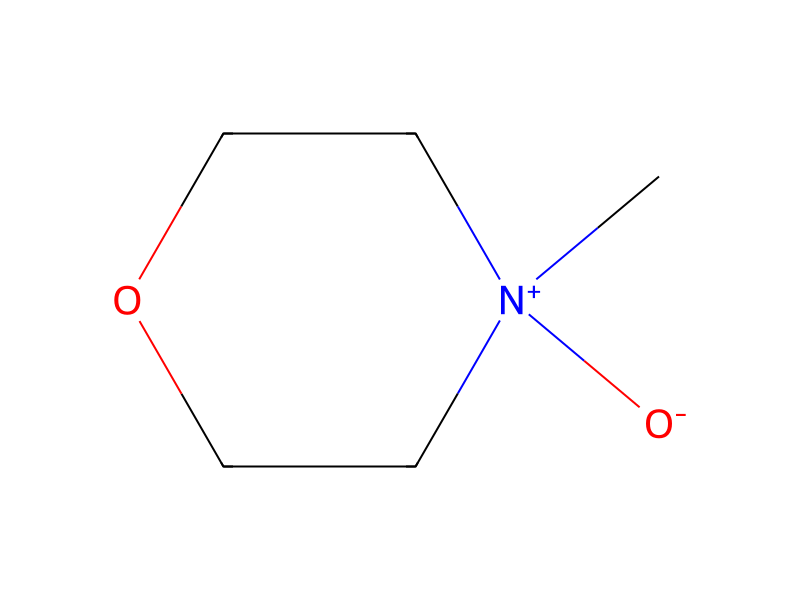
Methyl morpholine oxide → N-(2-Oxopropyl)benzamide
Reaction equation

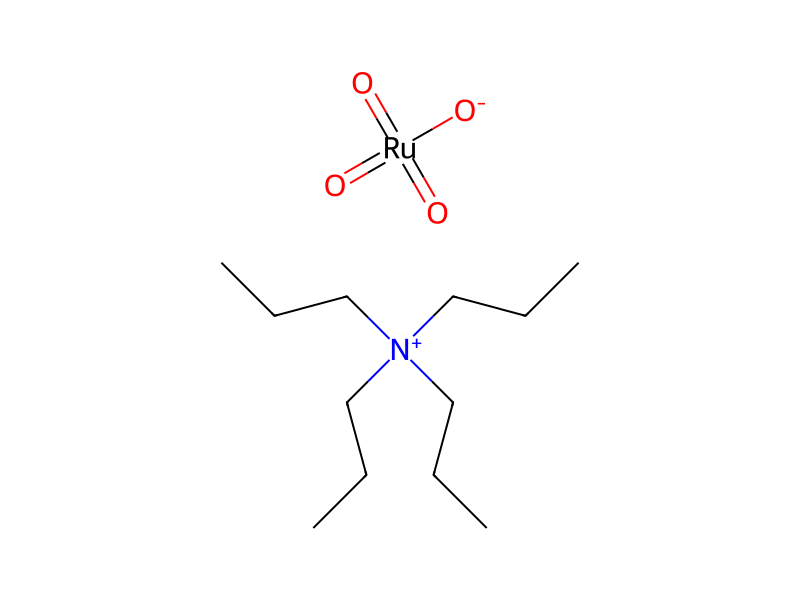
[OH:1][CH:2]([CH3:13])[CH2:3][NH:4][C:5](=[O:12])[C:6]1[CH:11]=[CH:10][CH:9]=[CH:8][CH:7]=1.C[N+]1([O-])CCOCC1>C(Cl)Cl.[Ru]([O-])(=O)(=O)=O.C([N+](CCC)(CCC)CCC)CC>[O:1]=[C:2]([CH3:13])[CH2:3][NH:4][C:5](=[O:12])[C:6]1[CH:11]=[CH:10][CH:9]=[CH:8][CH:7]=1Participants
5
Reactant 2

Product 1

Reagents, catalysts & solvents 2

Conditions
- Temperature
- 0 °C
Procedure
Prepare a solution of N-(2-hydroxypropyl)benzamide (8.22 g, 45.9 mmol) in methylene chloride (100 mL). Add N-methylmorpholine N-oxide (7.0 g, 60.0 mmol) followed by powdered 4 Å molecular sieves. Cool the mixture to 0° C. and add tetra-n-propylammonium perruthenate in one portion. Stir the mixture for 30 minutes and then warm to room temperature for 1 hour and filter through Celite®. Concentrate the filtrate and flash-chromatograph on silica gel eluting with 100% ethyl acetate to afford 6.1 g of N-(2-oxopropyl)benzamide as a white solid. MS: m/e=178 (MH+)
Workup
- temperaturewarm to room temperature for 1 hour
- filtrationfilter through Celite®
- concentrationConcentrate the filtrate and flash-chromatograph on silica gel eluting with 100% ethyl acetate
Sources & evidence
- ORD record
- ord-9ebfa026cad1413e977caaa07a299728
- Source dataset
- uspto-grants-2007_09
- Patent number
- US07265246B2
Reaction notes
Loading…