Peracetic Acid → 2-Chloroquinoxaline-1-oxide
Reaction equation

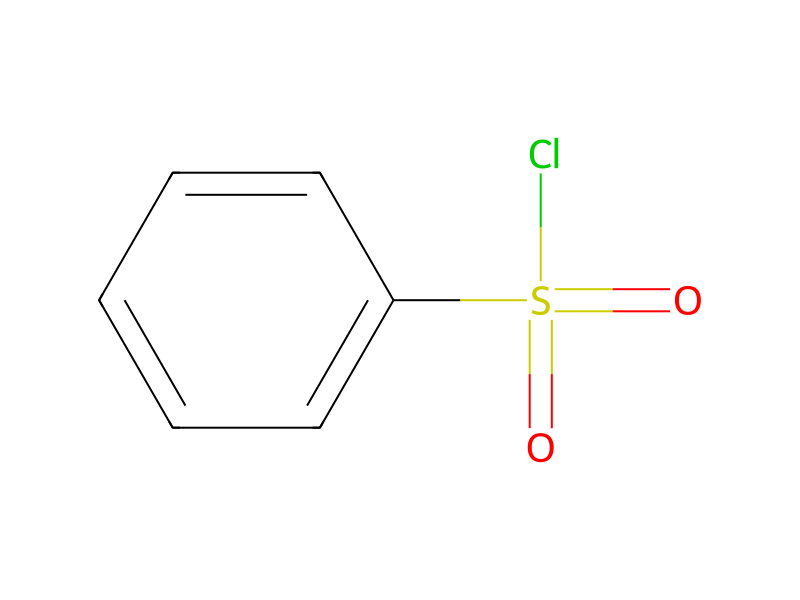
N1C2C(=CC=CC=2)N=CC=1.C(OO)(=O)C.[N+:16]1([O-:27])[C:25]2[C:20](=[CH:21][CH:22]=[CH:23][CH:24]=2)[N+:19]([O-])=[CH:18][CH:17]=1.C1(S([Cl:37])(=O)=O)C=CC=CC=1.C(=O)(O)[O-].[Na+]>C(OC(=O)C)(=O)C>[Cl:37][C:17]1[CH:18]=[N:19][C:20]2[C:25](=[CH:24][CH:23]=[CH:22][CH:21]=2)[N+:16]=1[O-:27]Participants






Procedure
1 gram mole of quinoxaline (130 g.) is oxidized by treatment with 3150 milliliters of a 1.2 molar solution of peracetic acid in acetic anhydride, according to the method of Landquist, reported in the Journal of the Chemical Society at page 2816 (1953). The product, quinoxaline-1,4-dioxide, having a melting point of between 241.5° and 242.0°C. (with decomposition), is obtained in 50-60% yield. It is reacted with 530 grams of benzenesulfonyl chloride at a temperature of 25°C. for 1 to 12 hours and the resulting grey-green solid product is treated with 440 milliliters of a 10% aqueous solution of sodium bicarbonate, to produce 2-chloroquinoxaline-1-oxide. The product obtained has a melting point of 115°-116°C. after crystallization from cyclohexane or methanol. It is obtained in approximately 60% yield. The method for this reaction is reported in the Journal of General Chemistry, V.S.S.R., volume 34, page 2836 (1964 ).
Workup
- customis obtained in 50-60% yield
Sources & evidence
- ORD record
- ord-d4af77eb309f439dae3240ec92bf54cc
- Source dataset
- uspto-grants-1976_07
- Patent number
- US03971725
Reaction notes
Loading…