5-Fluorouracil → 1-Benzenesulfonyl-5-fluorouracil
Reaction equation

[F:1][C:2]1[C:3](=[O:9])[NH:4][C:5](=[O:8])[NH:6][CH:7]=1.C(=O)([O-])[O-].[K+].[K+].O1CCOCC1.[C:22]1([S:28](Cl)(=[O:30])=[O:29])[CH:27]=[CH:26][CH:25]=[CH:24][CH:23]=1>C(O)C>[C:22]1([S:28]([N:6]2[CH:7]=[C:2]([F:1])[C:3](=[O:9])[NH:4][C:5]2=[O:8])(=[O:30])=[O:29])[CH:27]=[CH:26][CH:25]=[CH:24][CH:23]=1Participants
Reactant 4

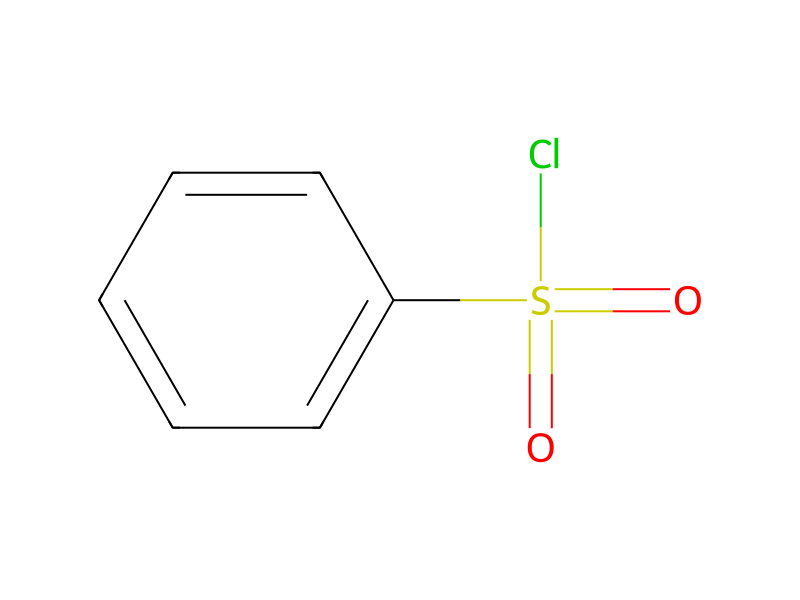


Product 1

Reagents, catalysts & solvents 1

Conditions
- Temperature
- 80 °C
Procedure
2.6 g (0.02 mole) of 5-fluorouracil and 1.38 g (0.01 mole) of anhydrous potassium carbonate were suspended in 70 ml. of dioxane. 3.5 g (0.02 mole) of benzenesulfonyl chloride in 10 ml. of dioxane was dropwise added thereto and stirred at 80°C. for 7 hours. The reaction mixture was cooled to room temperature and filtered. The filtrate was concentrated under reduced pressure and a resinous residue was obtained. The residue was dissolved in a small amount of ethanol and allowed to stand at 5°C. overnight. There was obtained 2.95 g (54.6% yield) of 1-benzenesulfonyl-5-fluorouracil. The product was recrystallized from dioxane-ethanol and gave granular crystals melting at 256°-257°C. The results of an elementary analysis thereof were well in agreement with the calculated value as follows:
Workup
- temperatureThe reaction mixture was cooled to room temperature
- filtrationfiltered
- concentrationThe filtrate was concentrated under reduced pressure
- customa resinous residue was obtained
- waitto stand at 5°C. overnight
Sources & evidence
- ORD record
- ord-0596ea97426749fd835c855fd11e614c
- Source dataset
- uspto-grants-1976_07
- Patent number
- US03971784
Reaction notes
Loading…