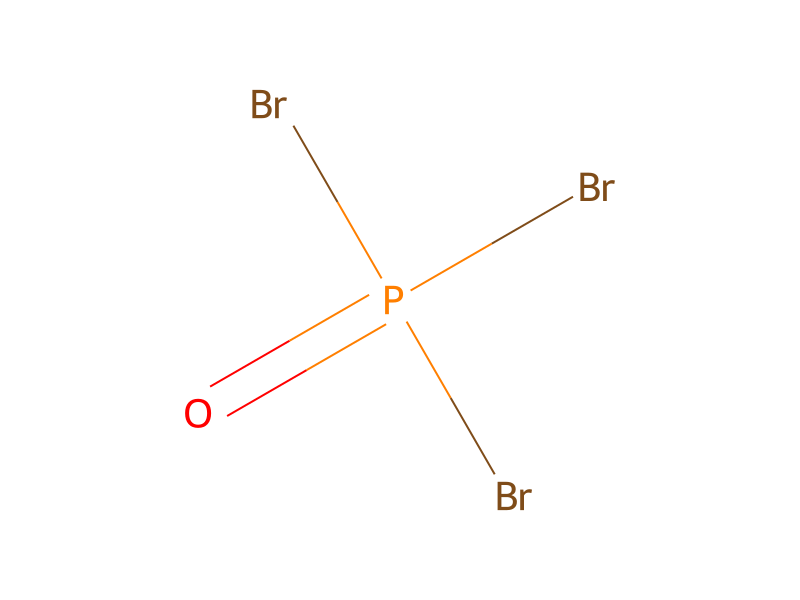
Phosphorus oxybromide → Methyl 4-bromo-8-fluoro-7-methylquinoline-2-carboxylate
Reaction equation

[F:1][C:2]1[C:3]([CH3:17])=[CH:4][CH:5]=[C:6]2[C:11]=1[N:10]=[C:9]([C:12]([O:14][CH3:15])=[O:13])[CH:8]=[C:7]2O.P(Br)(Br)([Br:20])=O>C1(C)C=CC=CC=1.CC#N>[Br:20][C:7]1[C:6]2[C:11](=[C:2]([F:1])[C:3]([CH3:17])=[CH:4][CH:5]=2)[N:10]=[C:9]([C:12]([O:14][CH3:15])=[O:13])[CH:8]=1Participants
5
Reactant 2

Product 1

Reagents, catalysts & solvents 2


Conditions
- Temperature
- 75 °C
Procedure
A mixture of (methyl 8-fluoro-4-hydroxy-7-methylquinoline-2-carboxylate (7-15, 842.1 mg, 3.58 mmol) and POBr3 (1129 mg, 3.94 mmol) in Toluene (8.14 mL) and CH3CN (0.81 mL) was heated at 75° C. for 1 h. After cooling to room temperature, the mixture was poured to a mixture of ice-H2O, followed by CH2Cl2 extraction (twice). The combined organic fractions were dried (Na2SO4), filtered and the solvent was evaporated under reduced pressure. The residue was purified by silica gel flash chromatography (gradient 0-50% EtOAc/Hexanes) to afford methyl 4-bromo-8-fluoro-7-methylquinoline-2-carboxylate (7-16, 710 mg). LRMS m/z (M+H)+ 298.1 found, 298.0 required.
Workup
- temperatureAfter cooling to room temperature
- extractionfollowed by CH2Cl2 extraction (twice)
- dry with materialThe combined organic fractions were dried (Na2SO4)
- filtrationfiltered
- customthe solvent was evaporated under reduced pressure
- customThe residue was purified by silica gel flash chromatography (gradient 0-50% EtOAc/Hexanes)
Sources & evidence
- ORD record
- ord-e28b63ac80c94edc9429f5408feaf569
- Source dataset
- uspto-grants-2016_03
- Patent number
- US09278960B2
Reaction notes
Loading…