P-Toluic Acid → Carbon Dioxide
Reaction equation

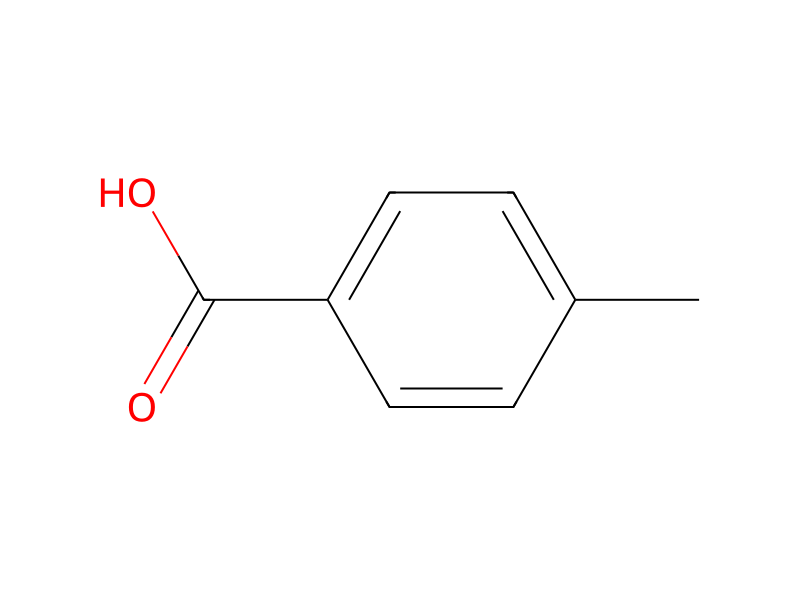
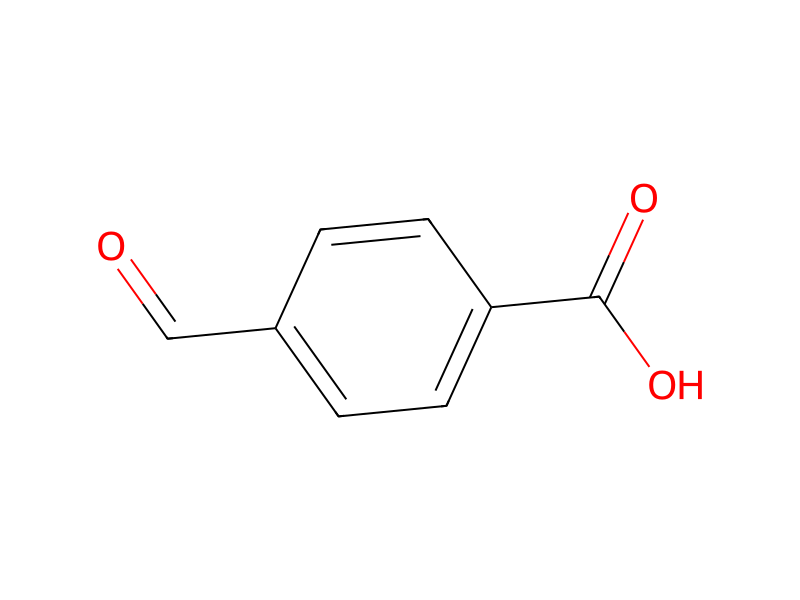
CC1C=CC([C:8]([OH:10])=[O:9])=CC=1.[C:11](O)(=[O:21])[C:12]1[CH:20]=[CH:19][C:15]([C:16]([OH:18])=[O:17])=[CH:14][CH:13]=1>[Ru]>[C:8](=[O:10])=[O:9].[C:16]([C:15]1[CH:19]=[CH:20][C:12]([CH:11]=[O:21])=[CH:13][CH:14]=1)([OH:18])=[O:17]Participants
5
Reactant 2

Product 2

Reagents, catalysts & solvents 1

Procedure
The reaction was conducted in the same manner as in Example 16 except that a product formed by charging 0.42 g of ruthenium chloride, 4.78 g of the deficient silicotungstate (K8 [SiW11O39 ].13H2O) obtained in Example 1 and 150 ml of water into a reactor at the same time (ruthenium concentration 1,000 ppm, a molar ratio of ruthenium to heteropoly-acid salt=1:1) was used as a catalyst. Consequently, the conversion of p-toluic acid was 75%. The selectivity for terephthalic acid relative to p-toluic acid reacted was 72%. As the other products, carbon dioxide and 4-carboxybenzaldehyde were formed in the selectivities of 27% and 1% respectively.
Sources & evidence
- ORD record
- ord-24531fe4ad134db492fe0aa46f69cb86
- Source dataset
- uspto-grants-1998_06
- Patent number
- US05760288
Reaction notes
Loading…