Ethyl Acetate → 3-[2-{2-(N-carboxymethyl-N-methylcarbamoyl)methyl-1-cyclohexenyl}-3-oxo-2,3-dihydropyridazin-6-yl]-2-phenylpyrazolo[1,5-a]pyridine
Reaction equation

C([O:3][C:4]([CH2:6][N:7]([CH3:39])[C:8]([CH2:10][C:11]1[CH2:16][CH2:15][CH2:14][CH2:13][C:12]=1[N:17]1[C:22](=[O:23])[CH:21]=[CH:20][C:19]([C:24]2[C:25]([C:33]3[CH:38]=[CH:37][CH:36]=[CH:35][CH:34]=3)=[N:26][N:27]3[CH:32]=[CH:31][CH:30]=[CH:29][C:28]=23)=[N:18]1)=[O:9])=[O:5])C.[OH-].[Na+].C(OCC)(=O)C>O1CCOCC1.O>[C:4]([CH2:6][N:7]([CH3:39])[C:8]([CH2:10][C:11]1[CH2:16][CH2:15][CH2:14][CH2:13][C:12]=1[N:17]1[C:22](=[O:23])[CH:21]=[CH:20][C:19]([C:24]2[C:25]([C:33]3[CH:34]=[CH:35][CH:36]=[CH:37][CH:38]=3)=[N:26][N:27]3[CH:32]=[CH:31][CH:30]=[CH:29][C:28]=23)=[N:18]1)=[O:9])([OH:5])=[O:3]Participants
Reactant 3
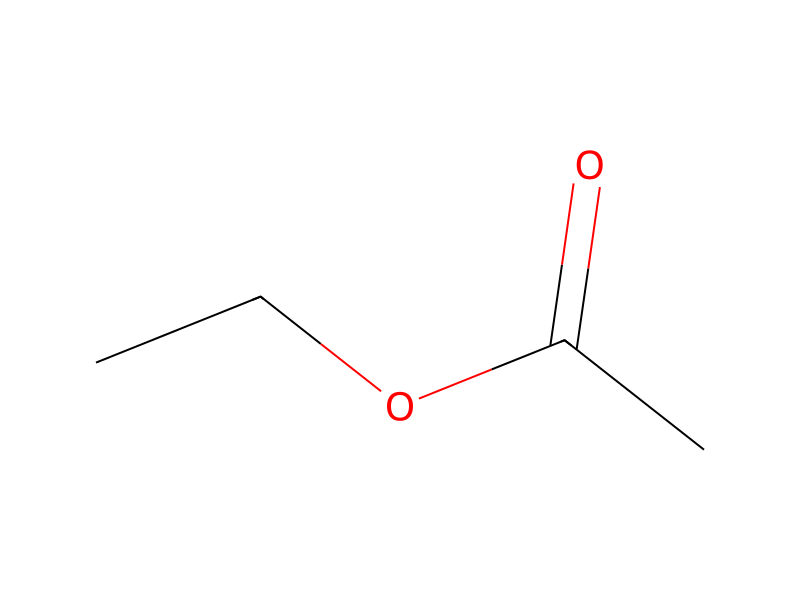
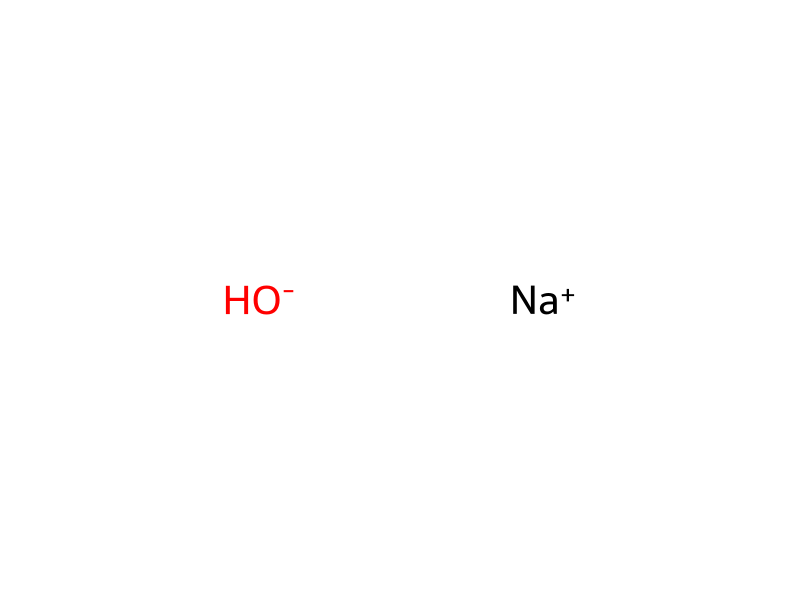

Product 1

Reagents, catalysts & solvents 2
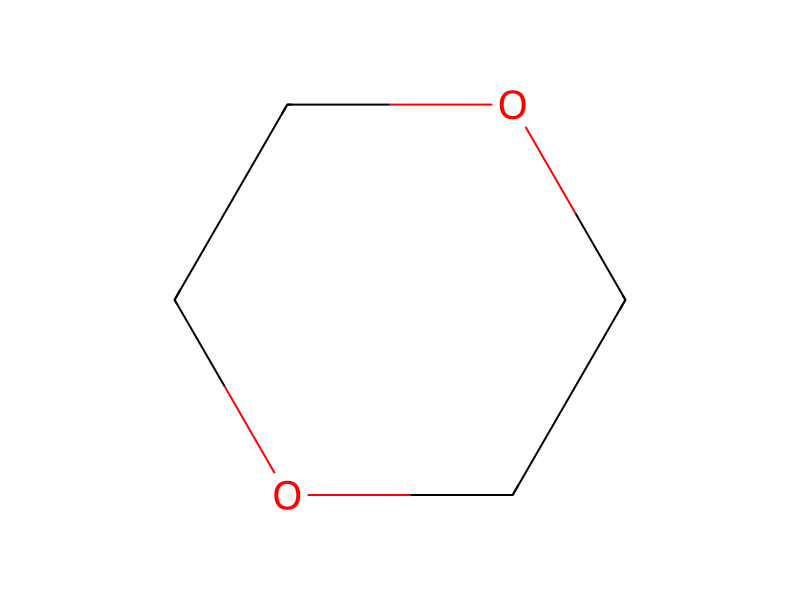
Procedure
To a solution of 3-[2-{2-(N-ethoxycarbonylmethyl-N-methylcarbamoyl)methyl-1-cyclohexenyl}-3-oxo-2,3-dihydropyridazin-6-yl]-2-phenylpyrazolo[1,5-a]pyridine (710 mg) in a mixture of dioxane (7 ml) and water (4 ml) was added 1N-aqueous sodium hydroxide solution (3.4 ml), which was stirred for two hours at room temperature. The reaction mixture was poured into ethyl acetate (100 ml) and aqueous layer was collected, which was adjusted to pH 1.5 with 6N-aqueous hydrochloric acid and extracted with ethyl acetate (100 ml×2). Organic layers were combined, washed in turn with water (50 ml×3) and brine (50 ml×2), and dried over magnesium sulfate. Evaporation of the solvent gave a residue, which was chromatographed on silica gel (80 ml) eluting in turn with dichloromethane, 5%, 10%, 15% methanol in dichloromethane. Fractions containing desired product were collected. Evaporation of the solvent gave a residue, which was recrystallized from a mixture of dichloromethane and n-hexane to give 3-[2-{2-(N-carboxymethyl-N-methylcarbamoyl)methyl-1-cyclohexenyl}-3-oxo-2,3-dihydropyridazin-6-yl]-2-phenylpyrazolo[1,5-a]pyridine (300 mg).
Workup
- customwas collected
- extractionextracted with ethyl acetate (100 ml×2)
- washwashed in turn with water (50 ml×3) and brine (50 ml×2)
- dry with materialdried over magnesium sulfate
- customEvaporation of the solvent
- customgave a residue, which
- customwas chromatographed on silica gel (80 ml)
- washeluting in turn with dichloromethane, 5%, 10%, 15% methanol in dichloromethane
- additionFractions containing desired product
- customwere collected
- customEvaporation of the solvent
- customgave a residue, which
- customwas recrystallized from a mixture of dichloromethane and n-hexane
Sources & evidence
- ORD record
- ord-a0238eb8f5da42ba98a3f9e5462f2054
- Source dataset
- uspto-grants-1998_06
- Patent number
- US05773530
Reaction notes
Loading…