Acetic Anhydride → 1,2,3,4-Tetra-O-acetyl-beta-D-xylopyranose
Reaction equation

[C:1]([O-:4])(=[O:3])[CH3:2].[Na+].C(O[C:10](=[O:12])[CH3:11])(=O)C.O=[CH:14][C@@H:15]([C@H:17]([C@@H:19]([CH2:21][OH:22])[OH:20])[OH:18])[OH:16]>>[C:1]([O:4][C@@H:21]1[O:22][CH2:14][C@@H:15]([O:16][C:10](=[O:12])[CH3:11])[C@H:17]([O:18][C:17](=[O:18])[CH3:19])[C@H:19]1[O:20][C:15](=[O:16])[CH3:14])(=[O:3])[CH3:2]Participants


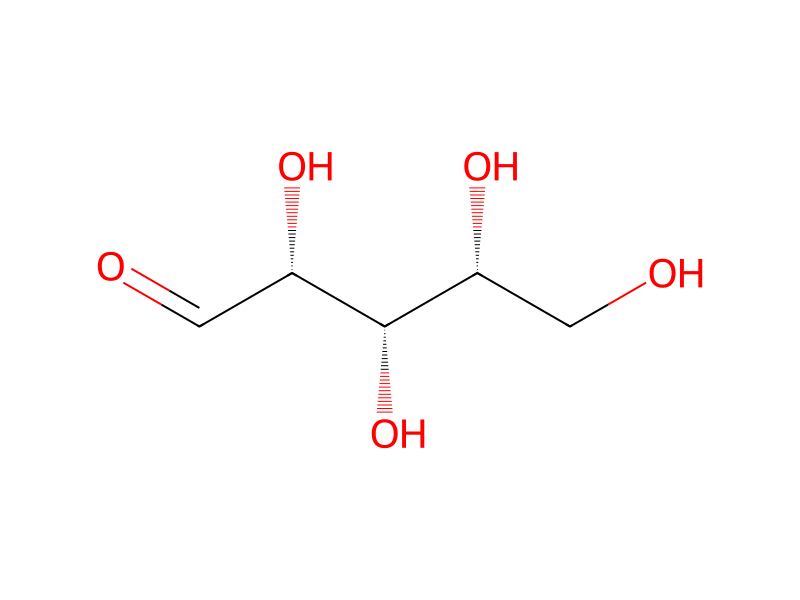

Conditions
- Temperature
- 130 °C
Procedure
A 200 mL round bottom flask containing sodium acetate (3.0 g) and acetic anhydride (36 mL) was heated to 130° C. on oil bath. When bubbles started to come out, D-xylose (5.0 g, 33.3 mmol) was added gradually. When bubbles did not come out any more, the flask was put away from the oil bath and cooled to room temperature. The reaction mixture was put in a 500 mL beaker containing ice (150 g), stirred for a while and then allowed to stand for 2 hours. The resulted light-brown precipitate was filtered by suction, washed with cold water and then dried by vacuum. The crude product was recrystallized from hot ethanol. The crystals were filtered by suction, washed with cold ethanol, and dried to give the title compound. White crystals. Yield 5.55 g, 53%.
Workup
- temperaturecooled to room temperature
- filtrationThe resulted light-brown precipitate was filtered by suction
- washwashed with cold water
- customdried by vacuum
- customThe crude product was recrystallized from hot ethanol
- filtrationThe crystals were filtered by suction
- washwashed with cold ethanol
- customdried
Sources & evidence
- ORD record
- ord-b4e9bce4a72e4805bb1e8f0537deabc5
- Source dataset
- uspto-grants-2005_10
- Patent number
- US06958389B2
Reaction notes
Loading…