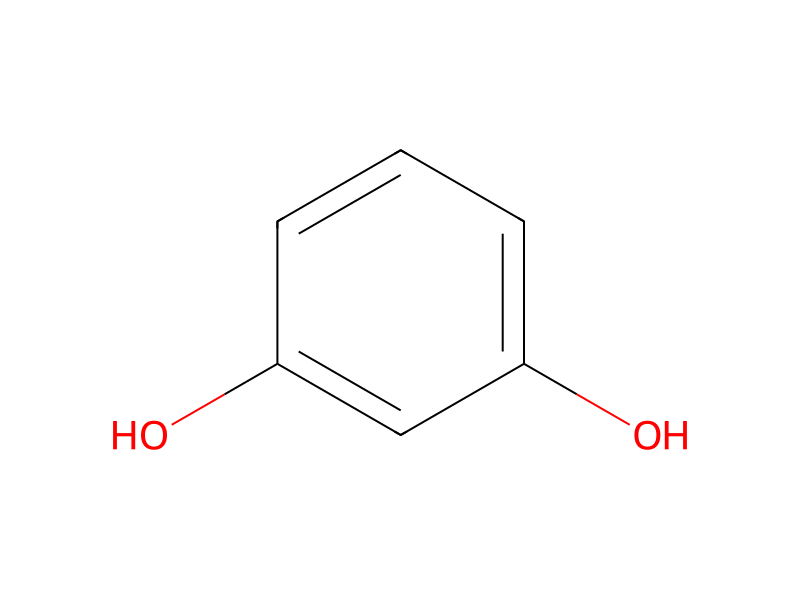
Resorcinol → 4,6-Bis(adamantyl)resorcinol
Reaction equation

[C:1]1([CH:8]=[CH:7][CH:6]=[C:4]([OH:5])[CH:3]=1)[OH:2].Br[C:10]12[CH2:19][CH:14]3[CH2:15][CH:16]([CH2:18][CH:12]([CH2:13]3)[CH2:11]1)[CH2:17]2>C1(C)C=CC=CC=1>[C:10]12([C:6]3[CH:7]=[C:8]([C:10]45[CH2:19][CH:14]6[CH2:15][CH:16]([CH2:18][CH:12]([CH2:13]6)[CH2:11]4)[CH2:17]5)[C:1]([OH:2])=[CH:3][C:4]=3[OH:5])[CH2:19][CH:14]3[CH2:15][CH:16]([CH2:18][CH:12]([CH2:13]3)[CH2:11]1)[CH2:17]2Participants
Reactant 2

Product 1

Reagents, catalysts & solvents 1

Conditions
- Temperature
- 110 °C
Procedure
Into a 250-mL 3-neck flask, equipped with nitrogen inlet, thermocouple and condenser, were added resorcinol (11.00 g, 100.0 mMol), bromoadmantane (44.02 g, 205.1 mMol) and toluene (150 mL). The mixture was heated to 110° C. and became a clear solution. The reaction was allowed to continue for 48 h, at which time TLC showed that all the resorcinol had disappeared. The solvent was removed and the solid was crystallized from hexanes (150 mL). The disubstituted product was obtained in 66.8% yield (25.26 g) as a white solid. Another 5.10 g product was obtained by silica gel column chromatography of the concentrated mother liquor after the first crop. The total yield of the product was 80.3%. Characterization of the product was by proton NMR, HPLC, FTR and Mass Spectrometry (MS).
Workup
- customInto a 250-mL 3-neck flask, equipped with nitrogen inlet
- customThe solvent was removed
- customthe solid was crystallized from hexanes (150 mL)
- customThe disubstituted product was obtained in 66.8% yield (25.26 g) as a white solid
Sources & evidence
- ORD record
- ord-8f680fc837a24208a757b54919d0bc72
- Source dataset
- uspto-grants-2007_12
- Patent number
- US07307137B2
Reaction notes
Loading…