Hydrochloric Acid → 3-({5-Bromo-4-[(4-hydroxybutyl)amino]pyrimidin-2-yl}amino)phenol
Reaction equation

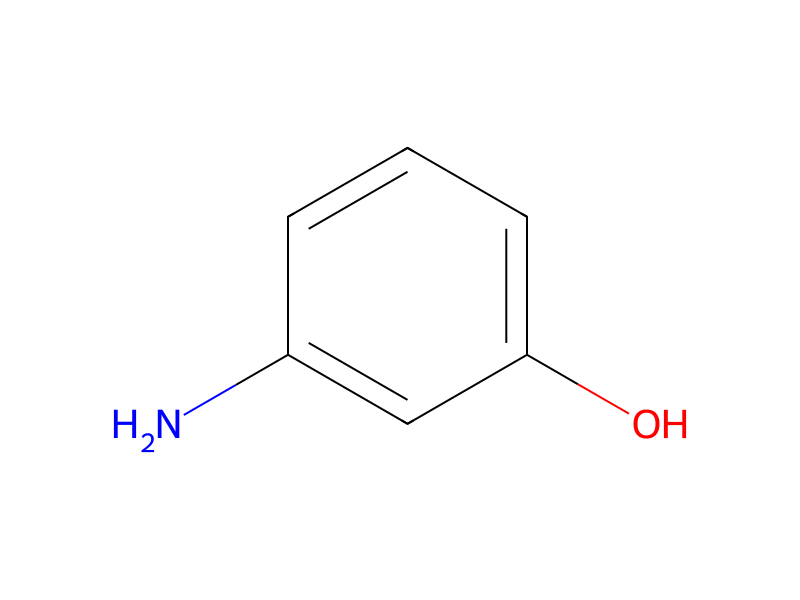
[NH2:1][C:2]1[CH:3]=[C:4]([OH:8])[CH:5]=[CH:6][CH:7]=1.[Br:9][C:10]1[C:11]([NH:17][CH2:18][CH2:19][CH2:20][CH2:21][OH:22])=[N:12][C:13](Cl)=[N:14][CH:15]=1.Cl>C(#N)C.O1CCOCC1>[Br:9][C:10]1[C:11]([NH:17][CH2:18][CH2:19][CH2:20][CH2:21][OH:22])=[N:12][C:13]([NH:1][C:2]2[CH:3]=[C:4]([OH:8])[CH:5]=[CH:6][CH:7]=2)=[N:14][CH:15]=1Participants





Procedure
A reaction mixture of 327 mg (3.0 mmol) of 3-aminophenol and 864 mg (3.1 mmol) of 4-(5-bromo-2-chloro-pyrimidin-4-ylamino)-butan-1-ol in 9 ml of acetonitrile is mixed with 0.75 ml of a 4 M solution of hydrochloric acid in dioxane, and it is stirred under reflux overnight. After the cooling, the reaction mixture is filtered, and the filtrate is completely concentrated by evaporation. The oil that is obtained is recrystallized from ethyl acetate/ethanol. The solid is filtered off and then dissolved in water. By adding triethylamine, the solution is made basic and extracted with ethyl acetate (2×). The combined organic phases are dried (Na2SO4), filtered and concentrated by evaporation. 444 mg (1.2 mmol, corresponding to 40% of theory) of the product is obtained.
Workup
- temperatureunder reflux overnight
- filtrationAfter the cooling, the reaction mixture is filtered
- concentrationthe filtrate is completely concentrated by evaporation
- customThe oil that is obtained
- customis recrystallized from ethyl acetate/ethanol
- filtrationThe solid is filtered off
- dissolutiondissolved in water
- additionBy adding triethylamine
- extractionextracted with ethyl acetate (2×)
- dry with materialThe combined organic phases are dried (Na2SO4)
- filtrationfiltered
- concentrationconcentrated by evaporation
- custom444 mg (1.2 mmol, corresponding to 40% of theory) of the product is obtained
Sources & evidence
- ORD record
- ord-c7667976c60844648ea3726346fb0854
- Source dataset
- uspto-grants-2007_12
- Patent number
- US07312225B2
Reaction notes
Loading…