Allyl bromide → HCID 21406355, compound
Reaction equation

[Cl:1][C:2]1[CH:3]=[C:4]([C:10]2[CH2:11][CH2:12][C:13](=[O:16])[NH:14][N:15]=2)[CH:5]=[C:6]([Cl:9])[C:7]=1[OH:8].C(=O)([O-])[O-].[K+].[K+].[CH2:23](Br)[CH:24]=[CH2:25]>CC(C)=O>[CH2:25]([O:8][C:7]1[C:6]([Cl:9])=[CH:5][C:4]([C:10]2[CH2:11][CH2:12][C:13](=[O:16])[NH:14][N:15]=2)=[CH:3][C:2]=1[Cl:1])[CH:24]=[CH2:23]Participants
5
Reactant 3
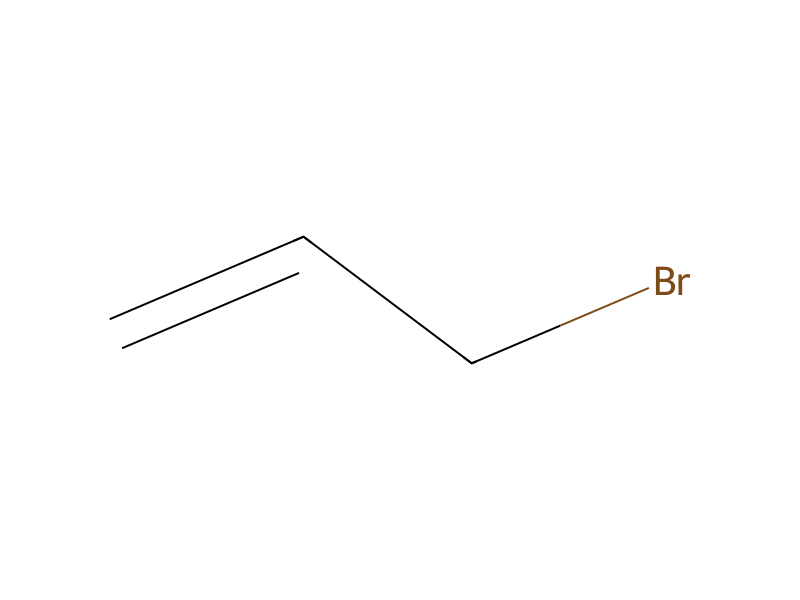


Product 1

Reagents, catalysts & solvents 1

Procedure
In 50 ml. of acetone was mixed 5 g. of 6-(3,5-dichloro-4-hydroxyphenyl)-4,5-dihydro-3(2H)-pyridazinone obtained in Example 5 and 3.3 g. of anhydrous potassium carbonate and to the resulting mixture was added dropwise 2.4 g. of allyl bromide at room temperature while stirring. After completion of the addition, the mixture was heated under reflux for 4 hours. After cooling, the reaction mixture was filtered, the filtrate was concentrated under reduced pressure and the residue was recrystallized from ethanol to give 5.3 g. of the desired product of m.p. 137° C. (Yield 93%).
Workup
- additionAfter completion of the addition
- temperaturethe mixture was heated
- temperatureunder reflux for 4 hours
- temperatureAfter cooling
- filtrationthe reaction mixture was filtered
- concentrationthe filtrate was concentrated under reduced pressure
- customthe residue was recrystallized from ethanol
- customto give 5.3 g
Sources & evidence
- ORD record
- ord-4f0beae55e124702a35f894fd2d25a70
- Source dataset
- uspto-grants-1977_10
- Patent number
- US04052395
Reaction notes
Loading…