Hydrazine hydrate (1:1) → HCID 20309600, compound
Reaction equation
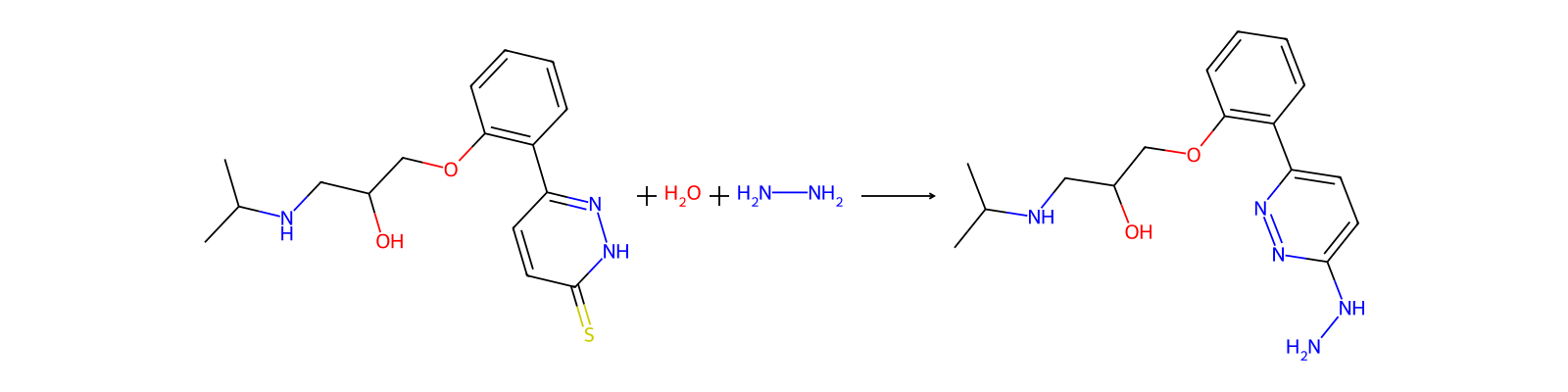
[OH:1][CH:2]([CH2:18][NH:19][CH:20]([CH3:22])[CH3:21])[CH2:3][O:4][C:5]1[CH:10]=[CH:9][CH:8]=[CH:7][C:6]=1[C:11]1[CH:12]=[CH:13][C:14](=S)[NH:15][N:16]=1.O.[NH2:24][NH2:25]>>[NH:24]([C:14]1[N:15]=[N:16][C:11]([C:6]2[CH:7]=[CH:8][CH:9]=[CH:10][C:5]=2[O:4][CH2:3][CH:2]([OH:1])[CH2:18][NH:19][CH:20]([CH3:22])[CH3:21])=[CH:12][CH:13]=1)[NH2:25]Participants
3



Procedure
A stirred mixture of 6-[2-(2-hydroxy-3-isopropylaminopropoxy)phenyl]-3(2H)-pyridazinethione (1.5 g, 0.005 mole) and hydrazine hydrate (30 ml) was heated under reflux in an atmosphere of nitrogen for 90 minutes. Excess of hydrazine hydrate was removed under reduced pressure to give 3-hydrazino-6-[2-(2-hydroxy-3-isopropylaminopropoxy)phenyl]-pyridazine as an oil which was converted into an amorphous citrate (2 g, 83%).
Workup
- temperaturewas heated
- temperatureunder reflux in an atmosphere of nitrogen for 90 minutes
- customExcess of hydrazine hydrate was removed under reduced pressure
Sources & evidence
- ORD record
- ord-40ed0f7617ef4793bb8d4c924e4c2cc2
- Source dataset
- uspto-grants-1977_10
- Patent number
- US04053601
Reaction notes
Loading…