Dicyclohexylcarbodiimide → HCID 14751520, compound
Reaction equation

C1(N=C=NC2CCCCC2)CCCCC1.[CH:16]([C:20]1[C:25]([O:26][CH2:27][C:28]([OH:30])=O)=[C:24]([Cl:31])[CH:23]=[C:22]([Cl:32])[CH:21]=1)([CH2:18][CH3:19])[CH3:17].[SH:33][C:34]1[S:35][CH2:36][CH2:37][N:38]=1>CN(C)C1C=CN=CC=1.C(Cl)Cl>[CH:16]([C:20]1[C:25]([O:26][CH2:27][C:28]([N:38]2[CH2:37][CH2:36][S:35][C:34]2=[S:33])=[O:30])=[C:24]([Cl:31])[CH:23]=[C:22]([Cl:32])[CH:21]=1)([CH2:18][CH3:19])[CH3:17]Participants
6


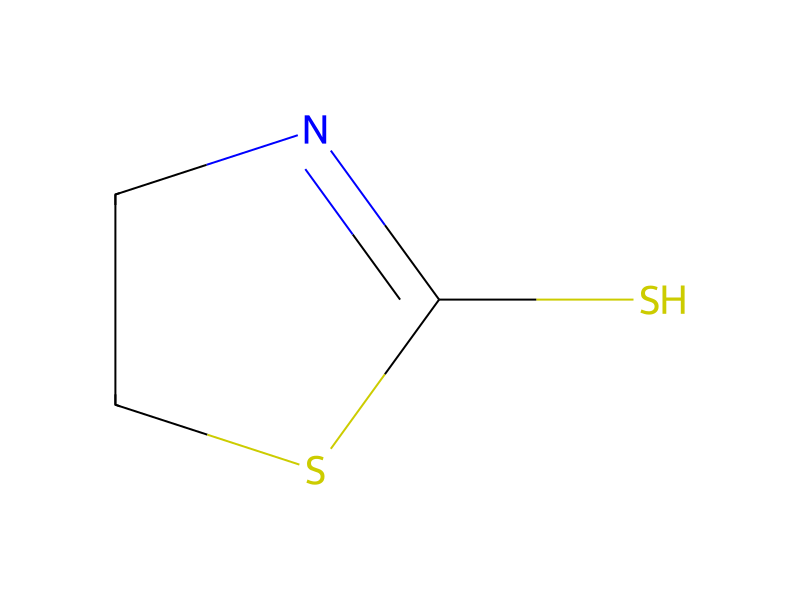



Conditions
- Temperature
- 0 °C
Procedure
A solution of 8.09 g of dicyclohexylcarbodiimide and 340 mg of 4-dimethylamino-pyridine in 60 ml of methylene chloride was added at -5°/0° C. to a solution of 9.78 g of (6-sec-butyl-2,4-dichloro phenoxy) acetic acid and 4.63 g of 2-mercaptothiazoline in 80 ml of methylene chloride and the mixture was stirred for 10 minutes at 0° C. and for four hours at ambient temperature. After filtering off the insolubles, the filtrate was evaporated to dryness, and the residue was chromatographed on silica (eluant: hexane-ethyl (7-3)) to obtain 10.3 g of expected product melting at 96° C.
Workup
- filtrationAfter filtering off the insolubles
- customthe filtrate was evaporated to dryness
- customthe residue was chromatographed on silica (eluant: hexane-ethyl (7-3))
Sources & evidence
- ORD record
- ord-e6fae5a51b0a47bd8f70c3df54c2587c
- Source dataset
- uspto-grants-1991_11
- Patent number
- US05064861
Reaction notes
Loading…