10-Undecenoyl chloride → N-(9-decenyl)-N'-benzyloxyurea
Reaction equation

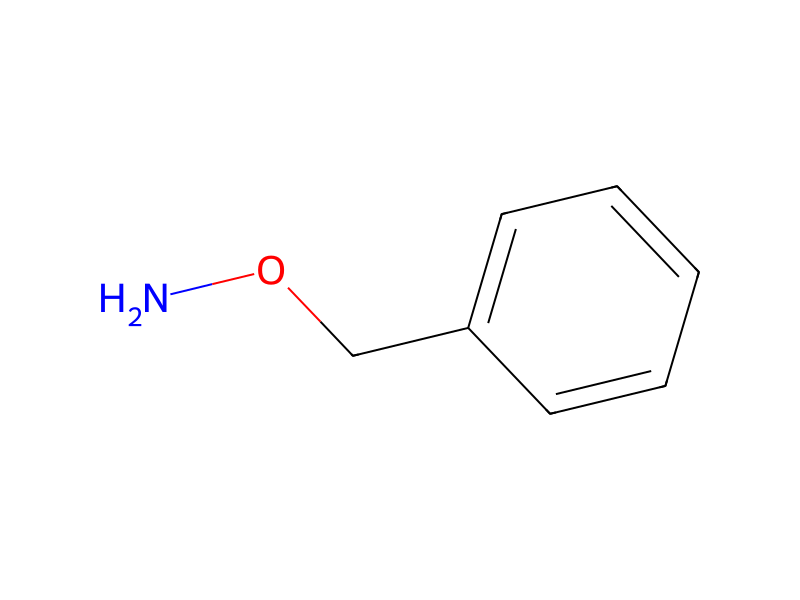
[CH2:1]([N:11]=[C:12]=[O:13])[CH2:2][CH2:3][CH2:4][CH2:5][CH2:6][CH2:7][CH2:8][CH:9]=[CH2:10].C(Cl)(=O)CCCCCCCCC=C.[CH2:27]([O:34][NH2:35])[C:28]1[CH:33]=[CH:32][CH:31]=[CH:30][CH:29]=1>ClCCCl>[CH2:1]([NH:11][C:12]([NH:35][O:34][CH2:27][C:28]1[CH:33]=[CH:32][CH:31]=[CH:30][CH:29]=1)=[O:13])[CH2:2][CH2:3][CH2:4][CH2:5][CH2:6][CH2:7][CH2:8][CH:9]=[CH2:10]Participants
Reactant 3


Product 1

Reagents, catalysts & solvents 1

Conditions
- Temperature
- 0 °C
Procedure
To a solution of 9-decenyl isocyanate, prepared as in Example 18 above from 10.8 ml of 10-undecenoyl chloride in 1,2-dichloroethane (150 ml) at room temperature was added benzyloxyamine (7.2 g). After 20 minutes, the mixture was evaporated, hexane (50 ml) was added, and the mixture cooled to 0° C. The resulting solids were collected by filtration, to provide N-(9-decenyl)-N'-benzyloxyurea as a white solid (7.14 g, mp 53°-55° C.). To a stirred slurry of this urea (3.50 g, 11.65 mmol) in DMF (35 ml) at room temperature under nitrogen was added sodium hydride (490 mg of a 60% dispersion in oil). After one hour, 1,3-dibromopropane (1.45 ml) was added, and the reaction was stirred for two hours. The mixture was poured into 1% aqueous HCl (200 ml), and extracted twice with ether. The combined extracts were washed with water, dried (MgSO4), filtered and evaporated. Purification by chromatography on silica gave 3-decyl-1-benzyloxy-3,4,5,6-tetrahydro-lH-pyrimidin-2-one as a colorless oil (1.92 g, 48% yield). Hydrogenolysis as in Example 2 above provided the title compound as a light magenta solid, after recrystallization from carbon tetrachloride, mp 45°-46° C.
Workup
- customthe mixture was evaporated
- additionhexane (50 ml) was added
- filtrationThe resulting solids were collected by filtration
Sources & evidence
- ORD record
- ord-09e20a8237414e1fa66d8d2a29e769a0
- Source dataset
- uspto-grants-1991_11
- Patent number
- US05066658
Reaction notes
Loading…