Trifluoroacetic anhydride → 2-Cyano-4-nitrobiphenyl
Reaction equation

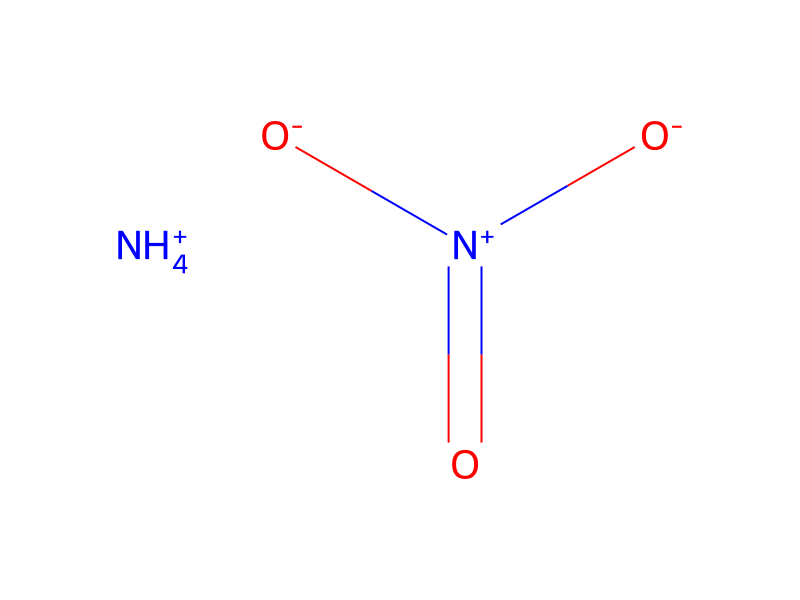
[C:1]([C:3]1[CH:8]=[CH:7][CH:6]=[CH:5][C:4]=1[C:9]1[CH:14]=[CH:13][CH:12]=[CH:11][CH:10]=1)#[N:2].[N+:15]([O-])([O-:17])=[O:16].[NH4+].FC(F)(F)C(OC(=O)C(F)(F)F)=O>C(Cl)(Cl)Cl>[C:1]([C:3]1[CH:8]=[C:7]([N+:15]([O-:17])=[O:16])[CH:6]=[CH:5][C:4]=1[C:9]1[CH:14]=[CH:13][CH:12]=[CH:11][CH:10]=1)#[N:2]Participants
5
Reactant 3


Product 1

Reagents, catalysts & solvents 1

Procedure
2-Cyanobiphenyl (0.111 moles, 20.0 g) and ammonium nitrate (10.0 grams) were added to 250 ml chloroform. Trifluoroacetic anhydride (80 ml) was added. The reaction mixture was stirred until the ammonium nitrate was dissolved. The reaction mixture was added to 300 ml of ice water. The organic layer was separated, dried over sodium sulfate, and concentrated in vacuo to yield 23.5 g of 2-Cyano-4-nitrobiphenyl. (MS)
Workup
- dissolutionwas dissolved
- customThe organic layer was separated
- dry with materialdried over sodium sulfate
- concentrationconcentrated in vacuo
Sources & evidence
- ORD record
- ord-289cc3603f384c688a4e5d086f0350f0
- Source dataset
- uspto-grants-1997_03
- Patent number
- US05612360
Reaction notes
Loading…