Triethylamine → 1,1-Dimethylethyl 2-(4-cyanobenzoyl)-1-methylhydrazinecarboxylate
Reaction equation

[C:1]([C:3]1[CH:11]=[CH:10][C:6]([C:7](Cl)=[O:8])=[CH:5][CH:4]=1)#[N:2].[CH3:12][N:13]([NH2:21])[C:14]([O:16][C:17]([CH3:20])([CH3:19])[CH3:18])=[O:15].C(N(CC)CC)C>ClCCl>[C:1]([C:3]1[CH:11]=[CH:10][C:6]([C:7]([NH:21][N:13]([CH3:12])[C:14]([O:16][C:17]([CH3:20])([CH3:19])[CH3:18])=[O:15])=[O:8])=[CH:5][CH:4]=1)#[N:2]Participants

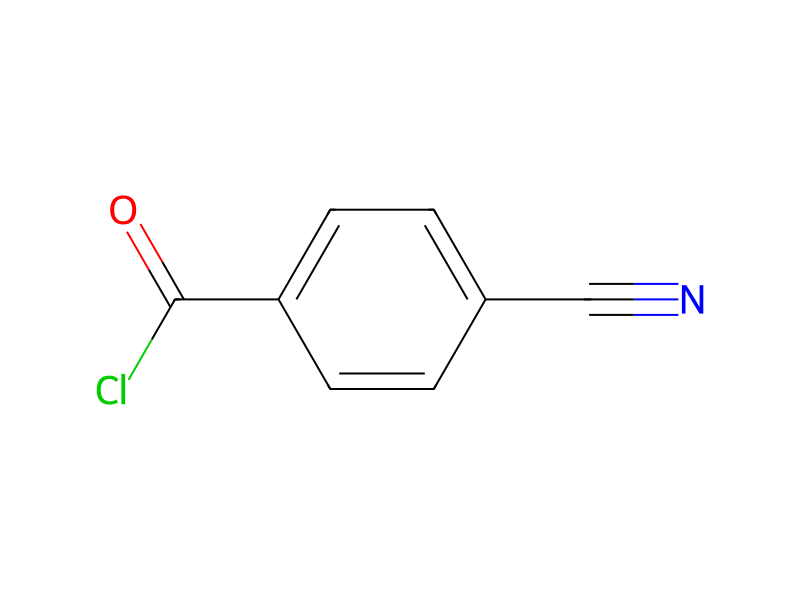



Procedure
A solution of 4-cyanobenzoyl chloride (2.5 g) in dichloromethane (50 ml) was added dropwise with stirring over 45 minutes to an ice-cold solution of t-butyl 2-methylcarbazate (2.0 g) in dichloromethane (50 ml) containing triethylamine (1.9 ml). The reaction mixture was stirred at ambient temperature for 2 hours and then washed with water, dilute aqueous sodium bicarbonate solution and brine, dried (MgSO4) and evaporated. The residue was crystallised from ethyl acetate to give t-butyl 3-(4-cyanobenzoyl)-2-methylcarbazate (2.5 g) as a white solid; m.p. 179°-181° C.; NMR Spectrum (DMSO-d6) 1.27-1.55 (9H, br s), 3.10 (3H, br s), 8.00 (4H, s), 10.90 (1H, s); Mass Spectrum m/Z 276 (M+H)+ ; Elemental Analysis: calculated for C14H17N3O3 : C, 61.1%; H, 6.2%; N, 15.3%; found: C, 61.6%; H, 6.2%; N, 15.5%.
Workup
- washwashed with water, dilute aqueous sodium bicarbonate solution and brine
- dry with materialdried (MgSO4)
- customevaporated
- customThe residue was crystallised from ethyl acetate
Sources & evidence
- ORD record
- ord-0cdef01b2c2740cf8f8f89f1d96e8006
- Source dataset
- uspto-grants-1997_03
- Patent number
- US05612373
Reaction notes
Loading…