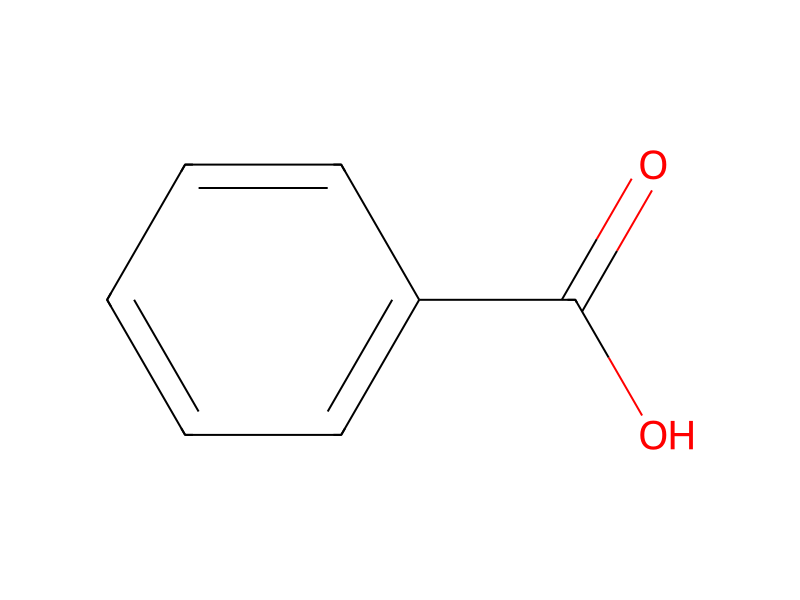
Benzoic Acid → HCID 219991, compound
Reaction equation

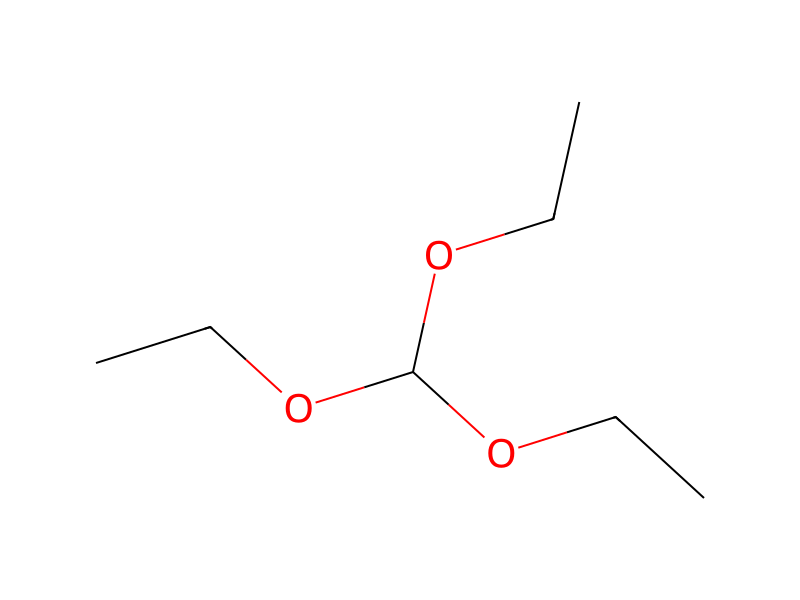
[CH3:1][C:2](O)([C:9](O)([C:11]1[CH:16]=[CH:15][CH:14]=[CH:13][CH:12]=1)[CH3:10])[C:3]1[CH:8]=[CH:7][CH:6]=[CH:5][CH:4]=1.C(OC(OCC)OCC)C.C(O)(=O)C1C=CC=CC=1>>[C:3]1([C:2](=[C:9]([C:11]2[CH:12]=[CH:13][CH:14]=[CH:15][CH:16]=2)[CH3:10])[CH3:1])[CH:8]=[CH:7][CH:6]=[CH:5][CH:4]=1Participants


Procedure
A high yield, four step synthesis process is disclosed for producing the omer, 2,3-diphenyl-1,3-butadiene, wherein in step 1 acetophenone pinacol is produced from the dimerization of acetophenone in 96% yield; in step 2 acetophenone pinacol is reacted with triethoxymethane and benzoic acid to produce 2,3-diphenyl-2-butene in about 88-96% yield. The 2,3-diphenyl-2-butene and N-bromosuccinimide (NBS) are reacted together in step 3 in an ultra violet reactor and in a CCl4 reaction solvent to produce in about 92% yield, the dibromo compound, 1,4-dibromo-2,3-diphenyl-2-butene. In step 4, 1,4-dibromo-2,3-diphenyl-2-butene is converted to the desired monomer in about 86% yield by reacting with NaI under refluxing conditions for about 90 minutes in a hot acetone solution. The monomer 2,3-diphenyl-1,3-butadiene is recovered in hexane, shaken (in the order listed) with water solutions of NaHSO3, NaHCO3, and pure water, dried over CaCl2, and the hexane is spun off. The residue is then recrystallized from hot methyl alcohol by the addition of water. The crystals which are air dried should be refrigerated as soon as possible to prevent spontaneous polymerization.
Sources & evidence
- ORD record
- ord-d0b8c54018104482a20589c297812d4d
- Source dataset
- uspto-grants-1987_05
- Patent number
- US04665257
Reaction notes
Loading…