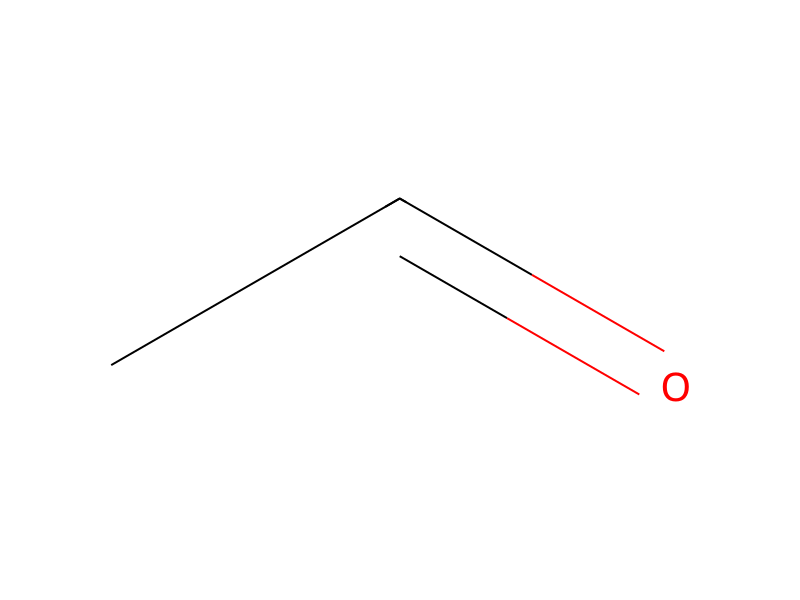
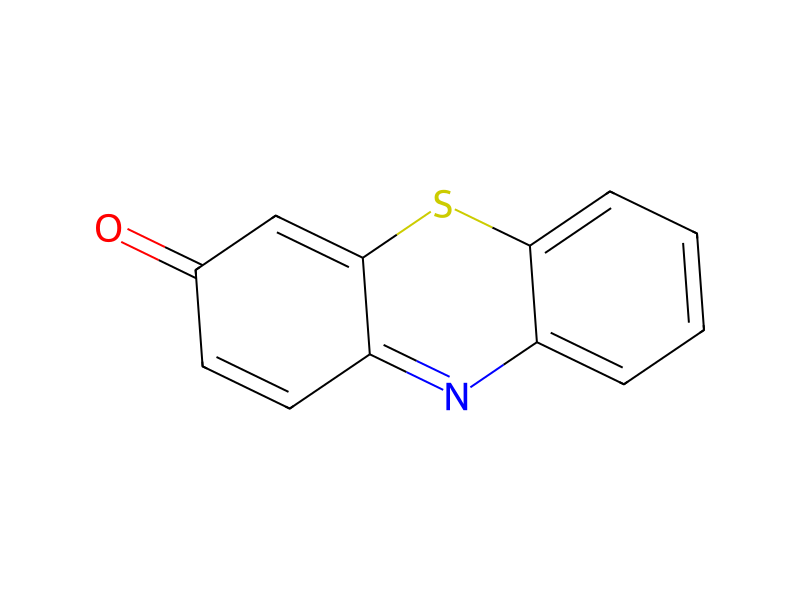
Acetaldehyde → 4-Acetyl-3H-phenothiazin-3-one
Reaction equation

[CH:1]1[C:14]2[C:5]([S:6][C:7]3[C:12]([N:13]=2)=[CH:11][CH:10]=[CH:9][CH:8]=3)=[CH:4][C:3](=[O:15])[CH:2]=1.[CH:16](=[O:18])[CH3:17]>C1C=CC=CC=1>[C:16]([C:4]1[C:3](=[O:15])[CH:2]=[CH:1][C:14]2[C:5]=1[S:6][C:7]1[C:12](=[CH:11][CH:10]=[CH:9][CH:8]=1)[N:13]=2)(=[O:18])[CH3:17]Participants
4
Reactant 2
Product 1

Reagents, catalysts & solvents 1

Procedure
A solution of 3H-phenothiazin-3-one (2 g) and acetaldehyde (32 ml) in benzene (240 ml) was irradiated with a 450 watt lamp for 2 days. The volatiles were removed under vacuum and the residue chromatographed on a silica gel column eluting with 25% EtOAc/hexane to afford the desired compound, m.p. 222° C.
Workup
- customThe volatiles were removed under vacuum
- customthe residue chromatographed on a silica gel column
- washeluting with 25% EtOAc/hexane
Sources & evidence
- ORD record
- ord-99fa7876c4f74808a4e2a42adf1d7c59
- Source dataset
- uspto-grants-1987_05
- Patent number
- US04667032
Reaction notes
Loading…