Sodium Dithionite → 4-bromo-2,7-dimethoxy-3-hydroxy-10H-phenothiazine
Reaction equation

[Br:1][C:2]1[C:3](=[O:20])[C:4]([O:18][CH3:19])=[CH:5][C:6]2[C:15]=1[S:14][C:13]1[C:8](=[CH:9][CH:10]=[C:11]([O:16][CH3:17])[CH:12]=1)[N:7]=2.S(S([O-])=O)([O-])=O.[Na+].[Na+]>C(OCC)(=O)C.O>[Br:1][C:2]1[C:15]2[S:14][C:13]3[C:8](=[CH:9][CH:10]=[C:11]([O:16][CH3:17])[CH:12]=3)[NH:7][C:6]=2[CH:5]=[C:4]([O:18][CH3:19])[C:3]=1[OH:20]Participants
5
Reactant 2
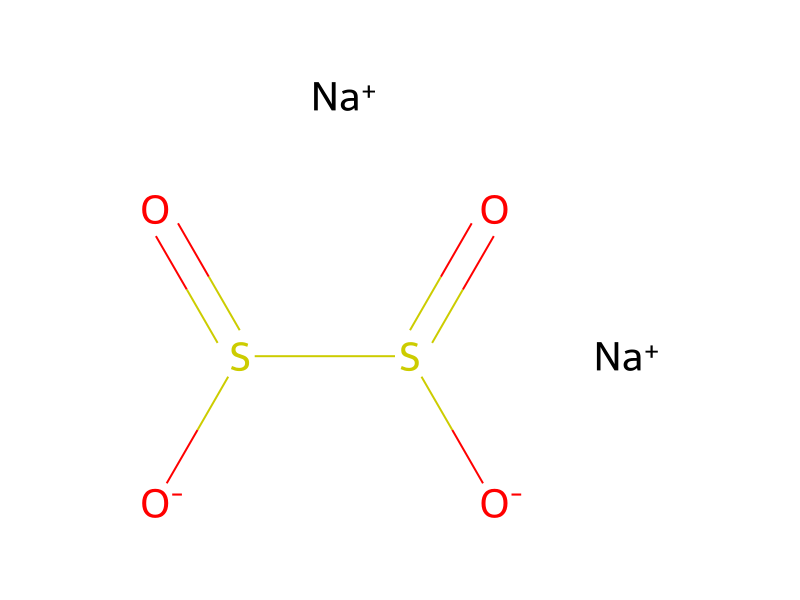

Product 1

Reagents, catalysts & solvents 2


Procedure
To a suspension of 4-bromo-2,7-dimethoxy-3H-phenothiazin-3-one (100 g) in a mixture of ethyl acetate (2 l) and water (1 l) was added sodium hydrosulfite (200 g) in one batch with mechanical stirring. The orange reaction mixture was stirred for 15 hours under a nitrogen atmosphere. The resulting white reaction mixture was filtered and the precipitate washed with water under a nitrogen atmosphere to prevent air oxidation of the compound. The title compound (130 g) was obtained as a wet material and was used as such in the next step (Step 2). An analytical sample was air dried, m.p. 185° C.
Workup
- filtrationThe resulting white reaction mixture was filtered
- washthe precipitate washed with water under a nitrogen atmosphere
Sources & evidence
- ORD record
- ord-910e31368f7841b597278a48f33dfee3
- Source dataset
- uspto-grants-1987_05
- Patent number
- US04667032
Reaction notes
Loading…