Ethylene → Ethylene styrene
Reaction equation

C=C.[CH2:3]([Li])[CH2:4]CC.C1(C)C(C)=CC=CC=1.C(O)(C)C.[CH2:20]=[CH:21][C:22]1[CH:27]=[CH:26][CH:25]=[CH:24][CH:23]=1>C1CCCCC1.C(O)(C)C>[CH2:20]=[CH:21][C:22]1[CH:27]=[CH:26][CH:25]=[CH:24][CH:23]=1.[CH2:3]=[CH2:4]Participants
Reactant 4


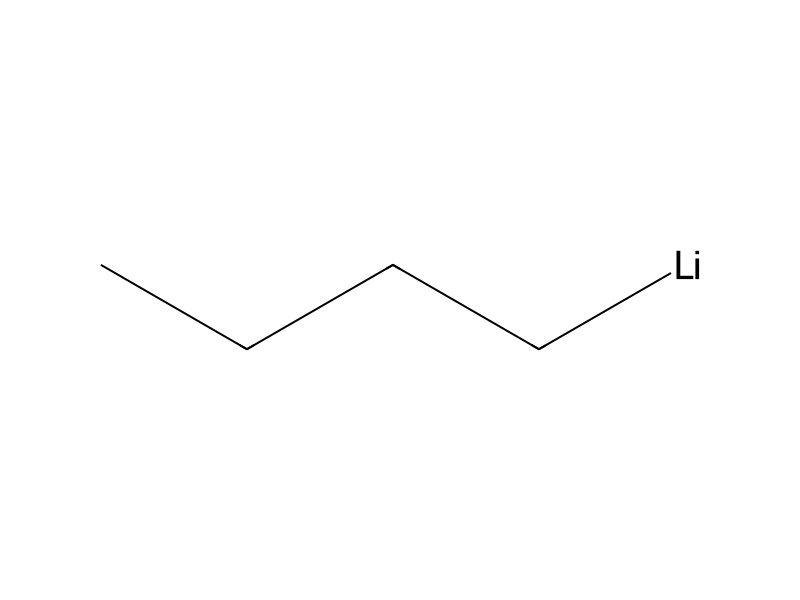
Product 1

Reagents, catalysts & solvents 2

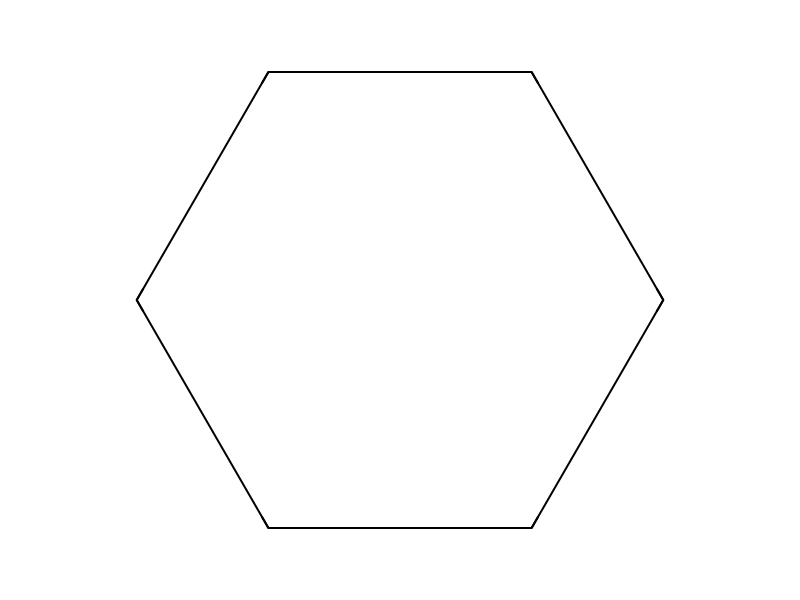
Conditions
- Temperature
- 60 °C
Procedure
A styrene-ethylene block copolymer was prepared as follows. The equipment described in Example 2 was employed. The autoclave was attached to a gas manifold through which vacuum, argon, nitrogen or ethylene could be admitted. The autoclave was also equipped with a 75-ml shot tank and a valved system. The equipment also included a temperature recorder. The autoclave was first thoroughly cleaned by filling it with about 800 ml of cyclohexane and 10 ml of 1.8N n-butyllithium solution in cyclohexane. This mixture was stirred for one hour and allowed to stand overnight. The contents of the autoclave was drained into a xylene-isopropanol mixture. The autoclave was then placed under argon and 350 ml of cyclohexane (dried by passage through alumina and deoxygenated with N2) was added via cannula. The autoclave was heated to 60° C. under argon. DIPYE, 0.86 g (5.1 mmol), was added by syringe through the valved system, followed by approximately 2.8 ml of 1.7N n-butyl lithium solution (4.9 mmol). Ethylene (100 psig) was immediately added and the mixture stirred at 60° C. for thirty minutes. The excess ethylene was vented. Then 32.08 grams of styrene was blown into the autoclave through the shot tank using about 30 psi of argon. There was a slight heat kick recorded on the temperature recorder. The reaction mixture was stirred for about 32 minutes at 60° C. About 10 ml of isopropanol was added to the system to terminate the polymer and the reaction mass stirred for about 5 minutes. The product was then recovered from the autoclave and treated as follows. The reaction mass consisted of a milky white liquid with no visible solid particles. The liquid was poured into a Pyrex baking dish and most of the cyclohexane was evaporated in a hot air oven at 75° C. The solution tended to skin over during the solvent removal. A white solid, (51.42 grams), was recovered which still smelled of cyclohexane. The solid was dissolved in 250 ml of methylene chloride to produce a milky white fluid. The block copolymer was precipitated by slowly dropping the liquid into 1400 ml of methanol in a Waring blender. A fine white solid was formed. It was separated and washed with a fresh portion of methanol (stirred for about 30 minutes), filtered and dried in a vacuum oven for 2 hours at 75° C. Eleven weight percent of polyethylene homopolymer was extracted from a small sample of the white powder by n-octane at 125° C. The remaining diblock copolymer was shown to contain polyethylene segments by infrared spectroscopy.
Workup
- customThe autoclave was also equipped with a 75-ml shot tank
- waitto stand overnight
- additionDIPYE, 0.86 g (5.1 mmol), was added by syringe through the valved system
- stirringthe mixture stirred at 60° C. for thirty minutes
- temperaturea slight heat
- stirringThe reaction mixture was stirred for about 32 minutes at 60° C
- customto terminate the polymer
- stirringthe reaction mass stirred for about 5 minutes
- customThe product was then recovered from the autoclave
- additiontreated
- additionThe liquid was poured into a Pyrex baking dish and most of the cyclohexane
- customwas evaporated in a hot air oven at 75° C
- customThe solution tended to skin over during the solvent removal
- customA white solid, (51.42 grams), was recovered which
- dissolutionThe solid was dissolved in 250 ml of methylene chloride
- customto produce a milky white fluid
- customThe block copolymer was precipitated
- customA fine white solid was formed
- customIt was separated
- washwashed with a fresh portion of methanol (stirred for about 30 minutes)
- filtrationfiltered
- customdried in a vacuum oven for 2 hours at 75° C
- extractionEleven weight percent of polyethylene homopolymer was extracted from a small sample of the white powder by n-octane at 125° C
Sources & evidence
- ORD record
- ord-20e9215be18c463a95e98295e60698a2
- Source dataset
- uspto-grants-1987_05
- Patent number
- US04668746
Reaction notes
Loading…