Benzoyl chloride → Methyl 6-chloro-3-methylflavone-8-carboxylate
Reaction equation

C([O-])(=O)[C:2]1[CH:7]=[CH:6][CH:5]=[CH:4][CH:3]=1.[Na+].[Cl:11][C:12]1[CH:21]=[C:16]([C:17]([O:19][CH3:20])=[O:18])[C:15]([OH:22])=[C:14]([C:23](=[O:26])[CH2:24][CH3:25])[CH:13]=1.[C:27](Cl)(=O)C1C=CC=CC=1.C(=O)([O-])[O-].[Na+].[Na+]>>[Cl:11][C:12]1[CH:13]=[C:14]2[C:15](=[C:16]([C:17]([O:19][CH3:20])=[O:18])[CH:21]=1)[O:22][C:25]([C:2]1[CH:7]=[CH:6][CH:5]=[CH:4][CH:3]=1)=[C:24]([CH3:27])[C:23]2=[O:26]Participants
5


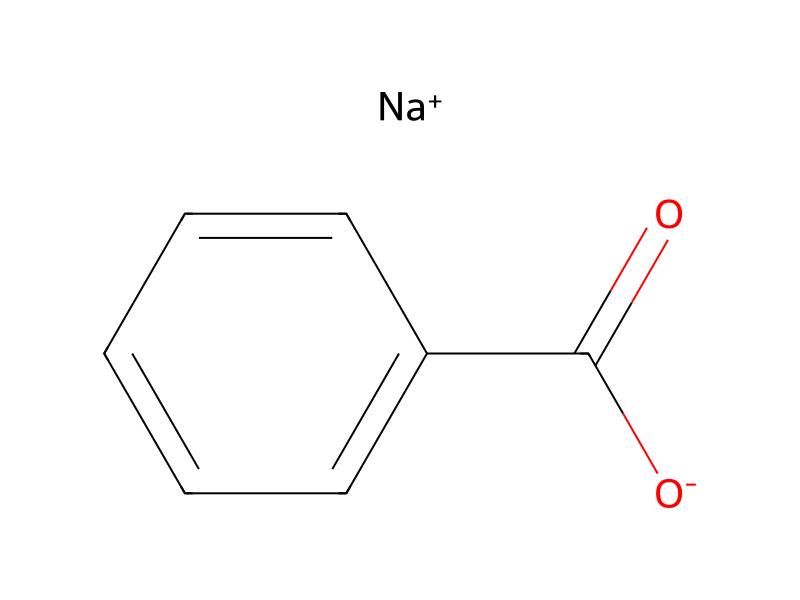


Procedure
A 23.8 g (0.165 mole) quantity of sodium benzoate was added with stirring to a mixture of 12.1 g (0.05 mole) of methyl 5-chloro-3-propionylsalicylate and 21.1 g (0.15 mole) of benzoyl chloride. The resulting mixture was heated at 180° to 190° C. in an oil bath for 8 hours to undergo reaction. After cooling, 100 ml of a 5% aqueous solution of sodium carbonate was added to the reaction mixture and the admixture was stirred. The solids formed were recrystallized from alcohol, giving 14.8 g (90.1%) of white crystal, which was repeatedly recrystallized from alcohol to obtain a compound having a melting point of 171.5° to 173.0° C. The compound was chemically analyzed with the results shown in Table 1 given below.
Workup
- temperatureThe resulting mixture was heated at 180° to 190° C. in an oil bath for 8 hours
- customreaction
- temperatureAfter cooling
- customThe solids formed
- customwere recrystallized from alcohol
Sources & evidence
- ORD record
- ord-3c026dee64874f09af6f7f43726e03a1
- Source dataset
- uspto-grants-1987_01
- Patent number
- US04634768
Reaction notes
Loading…