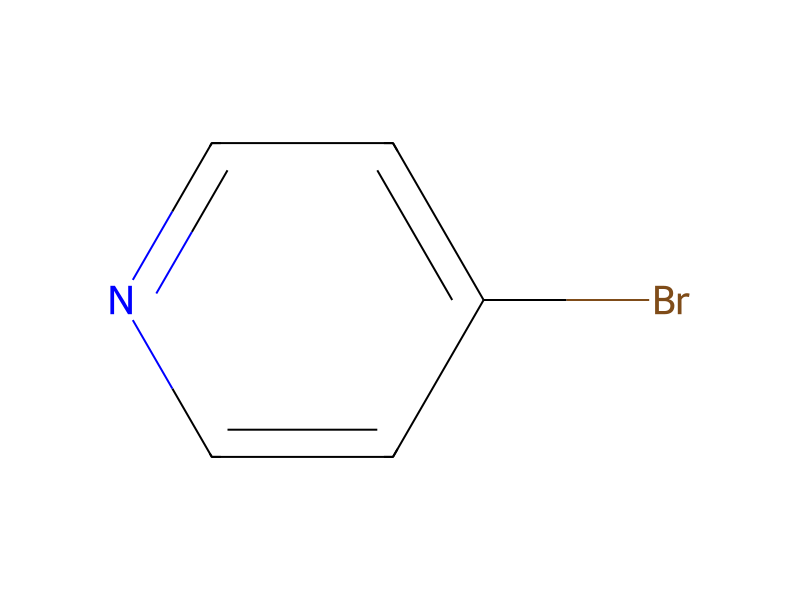
4-Bromopyridine → 8-(4-Pyridinyl)-1,4-dioxaspiro[4.5]decan-8-ol
Reaction equation

C([Li])CCC.Br[C:7]1[CH:12]=[CH:11][N:10]=[CH:9][CH:8]=1.[CH2:13]1[O:23][C:16]2([CH2:21][CH2:20][C:19](=[O:22])[CH2:18][CH2:17]2)[O:15][CH2:14]1.[Cl-].[NH4+]>CCCCCC.CCOCC.O1CCCC1>[CH2:14]1[O:15][C:16]2([CH2:21][CH2:20][C:19]([OH:22])([C:7]3[CH:12]=[CH:11][N:10]=[CH:9][CH:8]=3)[CH2:18][CH2:17]2)[O:23][CH2:13]1Participants
8
Reactant 4



Product 1

Reagents, catalysts & solvents 3



Conditions
- Temperature
- -78 °C
Procedure
Twenty milliliters (ml) of 1.6M solution of n-butyl lithium in hexane was added to 35 ml of ether cooled at -78° C. Five grams (g) of 4-bromopyridine dissolved in 30 ml of ether was added. Then, a solution of 5 g of 1,4-cyclohexanedione monoethyleneacetal dissolved in 30 ml of tetrahydrofuran was added. After the reaction was completed, the reaction mixture was poured into a saturated aqueous solution of ammonium chloride and extracted with chloroform and purified. There was obtained 5 g of 4-hydroxy-4-(4-pyridyl)cyclohexanone ethyleneacetal.
Workup
- additionwas added
- additionwas added
- extractionextracted with chloroform
- custompurified
Sources & evidence
- ORD record
- ord-4f90b5c6ea0c40e497d1cbd0f649f400
- Source dataset
- uspto-grants-1987_01
- Patent number
- US04639521
Reaction notes
Loading…