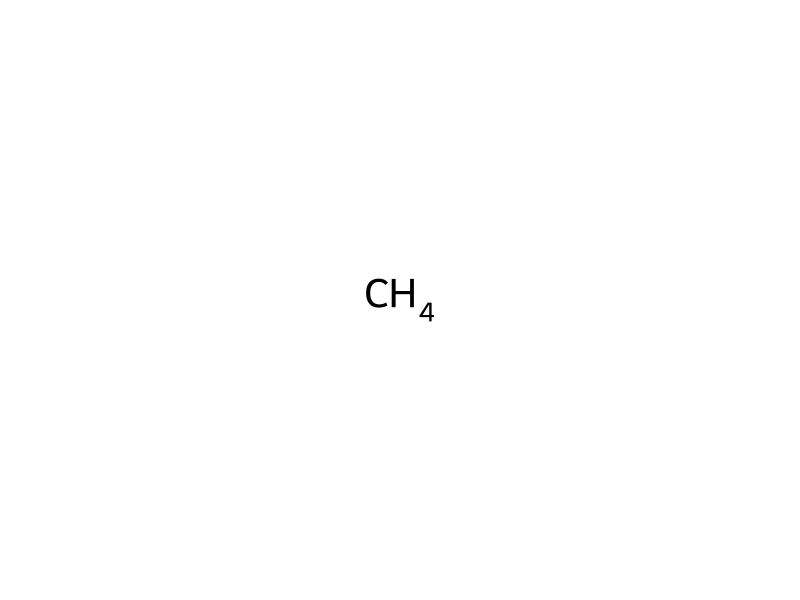
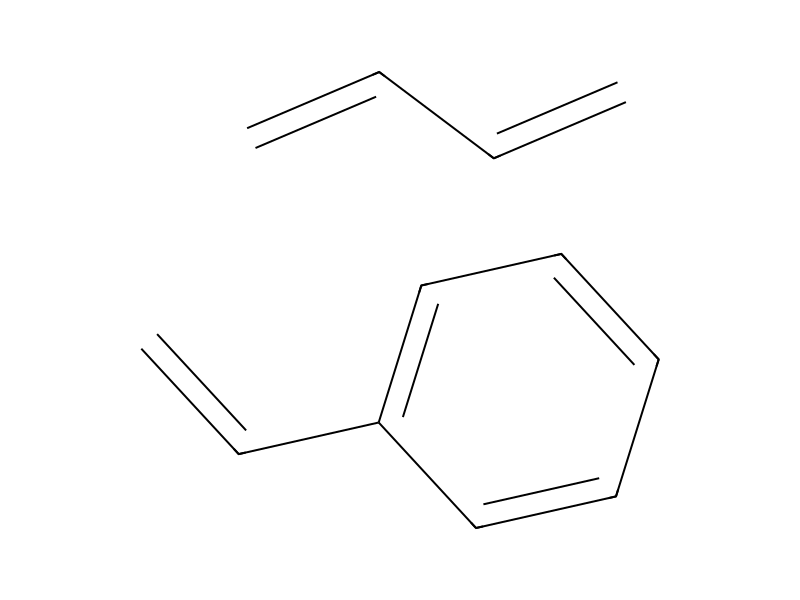
Methane → Benzene, ethenyl-, polymer with 1,3-butadiene
Reaction equation

[CH2:1](OC(=O)C(C)=C)[CH2:2][CH2:3][CH3:4].[CH2:11]=[CH:12][C:13]1[CH:18]=[CH:17][CH:16]=[CH:15][CH:14]=1.C.C(Cl)Cl.CO>C1(C)C=CC=CC=1>[CH2:1]=[CH:2][CH:3]=[CH2:4].[CH2:11]=[CH:12][C:13]1[CH:18]=[CH:17][CH:16]=[CH:15][CH:14]=1Participants
Reactant 4



Product 1
Reagents, catalysts & solvents 1

Procedure
The above semicrystalline polyolefins, 25 percent, (polypentene of Example I, polyhexadecene of Example II, polyoctadecene of Example II, and polyeicosene of Example III, and 75 percent by weight of styrene n-butyl methacrylate) (the aforesaid resin blend present in an amount of 70 weight percent) were admixed with 10 weight percent of Black Pearls L or 10 weight percent of Regal® 330 carbon black, which carbon black was allowed to dissolve with heating between 40° and 60° C. in toluene or methylene choride at 10 weight percent solids. The resultant slurries were then allowed to cool while the polymers were vigorously stirred using a Waring blender, a large Kady mill, and a ball mill or an attritor equipped with steel shot. The resultant slurried particles were then, in each instance, added to methanol, isolated by filtration, and then vacuum dried. Very small toner particles from submicron 0.5 micron to about 20 microns average diameter were obtained for the two prepared toners. Subsequent to classification, there resulted toner compositions with an average diameter of about 10 microns. These particles were then heat spheroidized by gentle warming of a vigorously stirred aqueous suspension of the dried toner particles in the presence of Alkanox soap followed by a rapid quench with ice water. The toner particles were then isolated in each instance by filtration and dried in vacuo.
Workup
- dissolutionto dissolve
- temperatureto cool while the polymers
- customisolated by filtration
- customvacuum dried
- customVery small toner particles from submicron 0.5 micron to about 20 microns average diameter were obtained for the two prepared toners
- customSubsequent to classification, there resulted toner compositions with an average diameter of about 10 microns
- temperatureThese particles were then heat
- temperatureby gentle warming of a vigorously stirred aqueous suspension of the dried toner particles in the presence of Alkanox soap
- customa rapid quench with ice water
- customThe toner particles were then isolated in each instance by filtration
- customdried in vacuo
Sources & evidence
- ORD record
- ord-0adae07bfc264c16936748ec1d48c19a
- Source dataset
- uspto-grants-1991_02
- Patent number
- US04990424
Reaction notes
Loading…