Formaldehyde → HCID 20072024, compound
Reaction equation

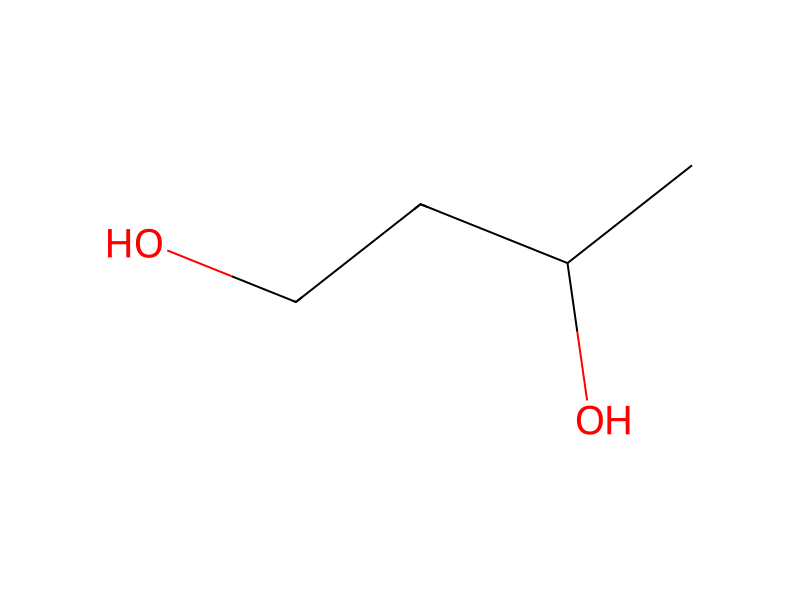
[C:1](F)(F)=[C:2](Cl)F.[C]=[O:8].[CH2:9]([OH:14])[CH2:10][CH:11]([OH:13])[CH3:12].C=O>[CH-]=O.[Cu+].F>[CH3:12][CH:11]1[CH2:10][CH2:9][O:14][C:2](=[O:8])[CH2:1][O:13]1Participants
7





Procedure
0.572 g of cuprous oxide and 20 ml of hydrogen fluoride were placed in a Daiflon reaction vessel connected to a carbon monoxide buret, and reacted with carbon monoxide at 5° C. under 1 atm to form a copper carbonyl catalyst solution. 9.1 ml (100 mmol) of 1,3-butanediol and 3.0 g (100 mmol) of paraformaldehyde were slowly added to the catalyst solution at 5° C. and the mixture was stirred to conduct the reaction with carbon monoxide under 1 atm. 85 molar %, based on 1,3-butanediol, of carbon monoxide was reacted. The product was separated from the catalyst layer to obtain 9.1 g (yield: 70%) of 5-methyl-1,4-dioxepan-2-one.
Workup
- customwas reacted
- customThe product was separated from the catalyst layer
Sources & evidence
- ORD record
- ord-9ad5e9f6d49c48fa9d2a98376873690f
- Source dataset
- uspto-grants-1991_02
- Patent number
- US04990629
Reaction notes
Loading…