Chloroacetic Acid → 2-(Chloromethyl)benzothiazole
Reaction equation

[NH2:1][C:2]1[CH:7]=[CH:6][CH:5]=[CH:4][C:3]=1[SH:8].[Cl:9][CH2:10][C:11](O)=[O:12].C(=O)([O-])[O-].[K+].[K+]>O>[Cl:9][CH2:10][C:11]1[O:12][C:3]2[CH:4]=[CH:5][CH:6]=[CH:7][C:2]=2[N:1]=1.[Cl:9][CH2:10][C:11]1[S:8][C:3]2[CH:4]=[CH:5][CH:6]=[CH:7][C:2]=2[N:1]=1Participants
Reactant 3
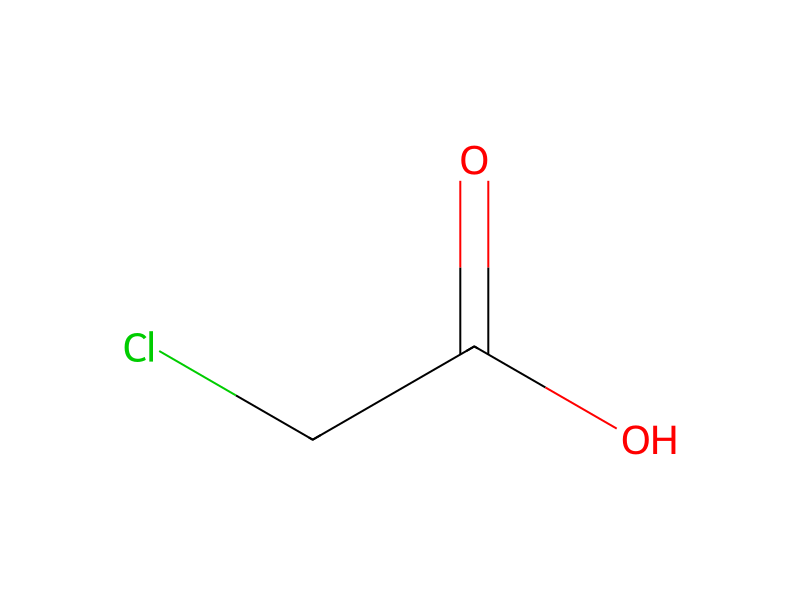


Product 2


Reagents, catalysts & solvents 1

Conditions
- Temperature
- 120 °C
Procedure
Using literature procedures (Addison, A. W.; Nageswara Rao, T.; Wahlgren, C. G. J. Heterocyclic Chem. 1983, 20, 1481-1484) a substituted 2-aminophenol (or a 2-aminothiophenol (5 mmol)) was mixed with chloroacetic acid (940 mg, 10 mmol) in polyphosphoric acid (5 mL), and the viscous mixture was then heated to 120° C. for 3 hours. The reaction was then cooled, and diluted with water (˜20 mL) and then neutralized with potassium carbonate to pH˜7. The mixture was then extracted with ethyl acetate, and the combined organic fractions were then dried over MgSO4 and concentrated. The residue was then purified by column chromatography on silica gel (50% ethyl acetate in hexanes) to afford the desired 2-chloromethylbenzoxazole (or 2-chloromethylbenzothiazole).
Workup
- temperatureThe reaction was then cooled
- extractionThe mixture was then extracted with ethyl acetate
- dry with materialthe combined organic fractions were then dried over MgSO4
- concentrationconcentrated
- customThe residue was then purified by column chromatography on silica gel (50% ethyl acetate in hexanes)
Sources & evidence
- ORD record
- ord-16d75dea2c5944f684b9b1b88e91fee9
- Source dataset
- uspto-grants-2005_03
- Patent number
- US06864265B2
Reaction notes
Loading…