Selenium Dioxide → 2-PYRIDINECARBOXALDEHYDE, 1-OXIDE
Reaction equation

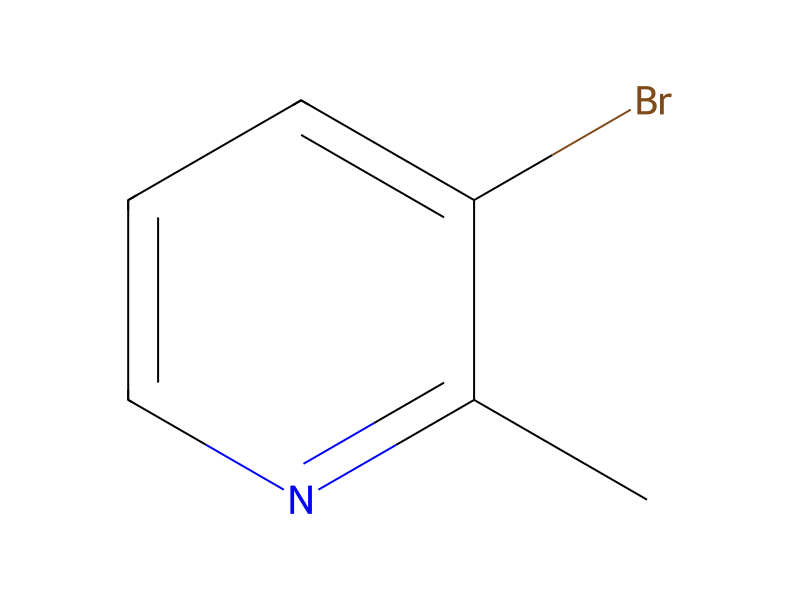
Br[C:2]1C(C)=[N:4][CH:5]=[CH:6][CH:7]=1.[Se](=O)=[O:10].[O:12]1[CH2:17][CH2:16]OCC1>>[N+:4]1([O-:10])[C:16]([CH:17]=[O:12])=[CH:2][CH:7]=[CH:6][CH:5]=1Participants
4



Procedure
To a solution of 3-bromo-2-picoline (prepared as described by Guthikonda, R. N.; Cama, L. D.; Quesada, M.; Woods, M. F.; Salzmann, T. N.; Christensen, B. G. J. Med. Chem. 1987, 30, 871-880) (249 mg, 1.45 mmol) in dioxane (2 mL) was added selenium(IV) oxide (212 mg, 1.91 mmol) and the mixture stirred at reflux overnight. The reaction mixture was concentrated under reduced pressure and purified by column chromatography on silica gel (Hexanes/ether, 3:1) to afford the title compound (78 mg, 29%) as a pale yellow solid. 1H NMR (CDCl3): δ7.38 (dd, 1H, J=9, 6 Hz), 8.05 (d, 1H, J=9 Hz), 8.76 (d, 1H, J=3 Hz), 10.25 (s, 1H).
Workup
- temperatureat reflux overnight
- concentrationThe reaction mixture was concentrated under reduced pressure
- custompurified by column chromatography on silica gel (Hexanes/ether, 3:1)
Sources & evidence
- ORD record
- ord-6d8819c6e93943bdbecb86bab71e0b03
- Source dataset
- uspto-grants-2005_03
- Patent number
- US06864265B2
Reaction notes
Loading…