2-Methyl-1-tetralone → 2-Methyl-1-naphthol
Reaction equation

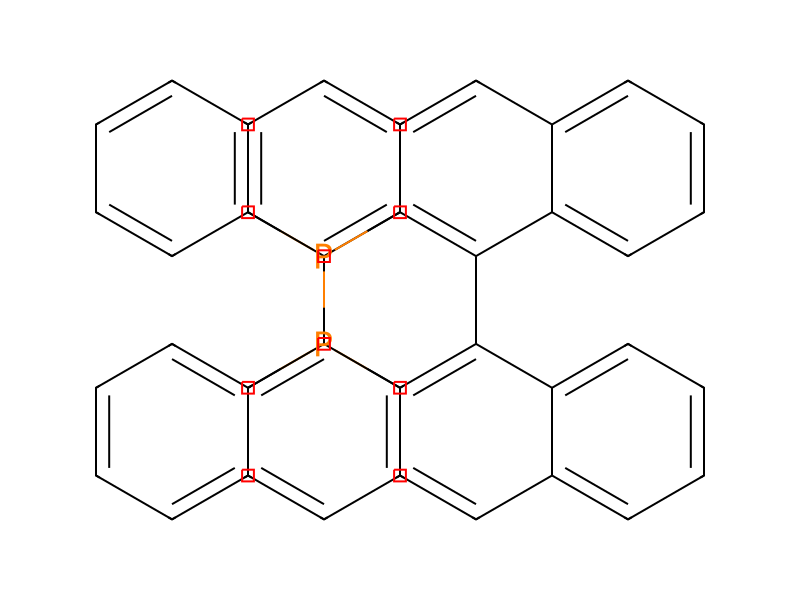
[CH3:1][CH:2]1[C:11](=[O:12])[C:10]2[C:5](=[CH:6][CH:7]=[CH:8][CH:9]=2)[CH2:4][CH2:3]1.C1C=CC(P(C2C(C3C(P(C4C=CC=CC=4)C4C=CC=CC=4)=CC=C4C=3C=CC=C4)=C3C(C=CC=C3)=CC=2)C2C=CC=CC=2)=CC=1>C1(C)C=CC=CC=1>[CH3:1][C:2]1[CH:3]=[CH:4][C:5]2[C:10](=[CH:9][CH:8]=[CH:7][CH:6]=2)[C:11]=1[OH:12]Participants
Reactant 2

Product 1

Reagents, catalysts & solvents 1

Procedure
We found that both the yield and the enantioselectivity of the arylation of 2-methyl-α-tetralone could be brought to good levels by running the arylation using 10-20 mol % Pd(0)/12-24 mol % BINAP in toluene at 100° C.8,9 It was found that an excess of aryl bromide was necessary to ensure complete conversion of the ketone; 2-methyl-1-naphthol, biaryls, and compounds resulting from aldol condensation were formed as side-products. In some reactions, the α-phenylated ketone was also observed as a side product. Subsequent experiments demonstrated that the latter side product was a result of aryl transfer from the phosphine ligand.10 Using the conditions described above, the arylations of 2-methyl-α-tetralone proceeded with enantioselectivities up to 88% (Table 1).11 We have also briefly examined the reactions of 2-methyl-1-indanone, 1. Using 5 mol % Pd(OAc)2/12 mol % BINAP the reaction with
Workup
- customyield
- customat 100° C
Sources & evidence
- ORD record
- ord-d25c89e0aae34d4d84c949e5354da684
- Source dataset
- uspto-grants-2005_03
- Patent number
- US06867310B1
Reaction notes
Loading…