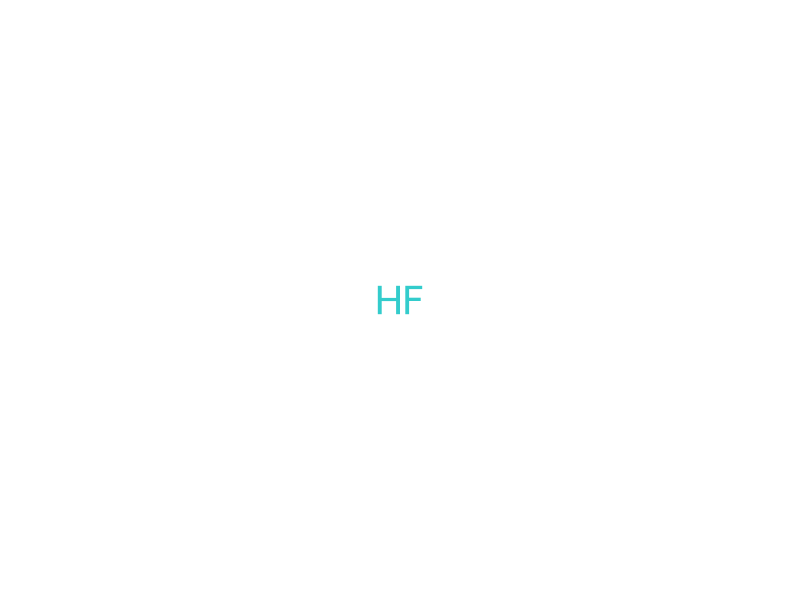
Hydrofluoric Acid → 2,5-Dichloro-3-fluoropyridine
Reaction equation

[FH:1].N[C:3]1[C:4]([Cl:10])=[N:5][CH:6]=[C:7]([Cl:9])[CH:8]=1.N([O-])=O.[Na+]>>[Cl:10][C:4]1[C:3]([F:1])=[CH:8][C:7]([Cl:9])=[CH:6][N:5]=1Participants



Procedure
To 450 ml (22.5 mol) of hydrogen fluoride in a stainless steel reaction vessel are added at a temperature of -5° to -1° , 163 g (1.0 mol) of 3-amino-2,5-dichloropyridine. Then there are added while stirring at the same temperature 82.8 g (1.2 mol) of sodium nitrite into the solution. The reaction mixture is stirred for 1.5 hours at -5° to -1°, then the temperature is slowly raised to +60° C. After the evolution of gas has ceased, the hydrogen fluoride is distilled off and the residue is taken up in methylene chloride. Ice/water is then added thereto and the cold mixture is neutralized with concentrated ammonium hydroxide solution. The organic phase separated and the water phase is extracted three times with methylene chloride. The organic phases are washed with water, dried over magnesium sulfate, filtered through silica-gel and evaporated. Thus, 141.5 g (85% of the theory) of 2,5-dichloro-3-fluoropyridine are obtained.
Workup
- additionThen there are added
- temperaturethe temperature is slowly raised to +60° C
- distillationthe hydrogen fluoride is distilled off
- additionIce/water is then added
- customThe organic phase separated
- extractionthe water phase is extracted three times with methylene chloride
- washThe organic phases are washed with water
- dry with materialdried over magnesium sulfate
- filtrationfiltered through silica-gel
- customevaporated
Sources & evidence
- ORD record
- ord-b63e412a44eb4e0abee335b749253ee0
- Source dataset
- uspto-grants-1987_12
- Patent number
- US04713109
Reaction notes
Loading…